Online casino without ID in the UK: what to expect
 Available in GB

UK rules require casinos to check eligibility, so claims of permanent access without identity checks need careful scrutiny.
Table of Contents
- Why a UK Casino Cannot Let You Play Without Identity Checks
- When a Casino May Ask for Documents
- How to Assess Claims Made by No-ID Casino Sites
- What to Check Before You Choose a Casino
- What “No Verification” Means for Live Casino Play
- The UK Rules Behind No-ID Casino Claims
- Crypto Payments, Casino Games and Verification
- Why “No ID Verification” Is Not a Reliable Promise
- Why a Withdrawal Can Trigger Further Checks
- Free Spins and No-ID Offers: Read the Conditions
Why a UK Casino Cannot Let You Play Without Identity Checks
A UK-licensed online casino cannot offer real-money gambling on the basis that it will never check who you are. Identity verification is part of the operator’s duties, not an optional security feature that a customer can decline. The operator must establish that its customers are eligible to use the service and meet its legal obligations. A promise of permanent access with no identity checks is therefore not compatible with a UKGC-licensed casino’s responsibilities.
Age is a separate, immediate requirement. You must be at least 18 to gamble online in the UK, and an operator must verify your age before it allows you to deposit money into a gambling account. That means a casino cannot let you fund an account first and leave the question of whether you are old enough until later. If you cannot pass the required age check, you cannot deposit for real-money play.
Identity checks also establish that the account belongs to the person using it. A name entered during registration is information supplied by the customer; it is not, by itself, proof of identity. Verification allows the operator to check that the account details correspond to a real customer and that the customer is entitled to use the account. Without that process, the operator would be relying on an unconfirmed claim.
If you’re looking for an online casino without ID in the UK, check the operator’s identity requirements directly before signing up. This list gives you one stated detail to consider: payout speed.
1. Amunbet
Payout speed: 1-3 business days Amunbet lists payouts at 1–3 business days. That stated timeframe is the available point to consider when reviewing it.
2. NightWin
Payout speed: 1-3 business days NightWin lists payouts at 1–3 business days. That stated timeframe is the available point to consider when reviewing it.
3. SlotoSport
Payout speed: 1-3 business days SlotoSport lists payouts at 1–3 business days. That stated timeframe is the available point to consider when reviewing it.
4. Britsino
Payout speed: 1-3 business days Britsino lists payouts at 1–3 business days. That stated timeframe is the available point to consider when reviewing it.
5. EvoSpin
Payout speed: 1-3 business days EvoSpin lists payouts at 1–3 business days. That stated timeframe is the available point to consider when reviewing it.
6. x3bet
Payout speed: 1-3 business days x3bet lists payouts at 1–3 business days. That stated timeframe is the available point to consider when reviewing it.
7. SpinFormula
Payout speed: 1-3 business days SpinFormula lists payouts at 1–3 business days. That stated timeframe is the available point to consider when reviewing it.
8. WinBeast
Payout speed: 1-3 business days WinBeast lists payouts at 1–3 business days. That stated timeframe is the available point to consider when reviewing it.
9. Dieselwin
Payout speed: 1-3 business days Dieselwin lists payouts at 1–3 business days. That stated timeframe is the available point to consider when reviewing it.
10. Jetsetspins
Payout speed: 1-3 business days Jetsetspins lists payouts at 1–3 business days. That stated timeframe is the available point to consider when reviewing it.
This is why the phrase “online casino without ID UK” needs careful interpretation. It can describe a search for a site that does not ask for an identity document at the first stage. It cannot, when applied to a UK-licensed casino, mean a site that is free to ignore identity and age verification altogether. The distinction is between the checks an operator must complete and the particular evidence or steps it may request from a customer. A lack of an immediate request to upload a document does not remove the underlying duty to verify.
The same distinction applies to “casino without photo ID UK”. The legal requirement is to verify the customer; it is not accurately described as a right to use an account without proving identity. A photo ID document is commonly part of the verification process, alongside proof of address, but the exact request can depend on the operator’s process and the information it needs to confirm. The absence of a photo-ID request at one moment does not establish that the casino has waived verification.
A casino may have information available to it that helps with checks, but account registration alone does not show that every required check has been completed. If the operator cannot verify the details through the information it holds or obtains, it may need to ask the customer for further evidence. A customer who cannot provide what is needed may find that the account cannot proceed as expected. This is a consequence of verification being a condition of lawful service, rather than a discretionary hurdle the operator can simply remove.
There is also a difference between trying a game without staking money and gambling with deposited funds. A real-money casino account involves access to gambling services, and the operator must apply its checks to customers using that service. In particular, it cannot permit a deposit before confirming that the customer is old enough. You should not treat the ability to open a registration form, view a site or begin an account setup as proof that the casino has approved you for real-money gambling.
Plinko Casino UK: Games, Real Money and Regulation
The rules sit within the UK’s licensing system. Operators offering real-money gambling to customers in England, Scotland and Wales must hold the relevant UK Gambling Commission licence. The Gambling Act 2005 provides the framework for gambling in those three nations; Northern Ireland is outside that Act’s scope. For a player, the practical point is that a casino presenting itself as a lawful UK service is expected to follow the requirements attached to its licence, including identity and age checks.
So an “online casino with no ID check UK” should not be understood as a licensed casino where no verification can ever take place. At most, the wording may refer to an account that has not yet reached a point where the operator needs additional evidence, or to a claim made about the site. It does not change the operator’s obligations or give a customer the right to bypass them. Before using a real-money service, expect the operator to verify who you are and to confirm that you are at least 18 before accepting a deposit.
When a Casino May Ask for Documents
A casino that does not request an upload as soon as you register has not necessarily skipped identity checks. The timing and the method are separate issues: an operator may complete some checks without asking you to send documents at the first step, but it still has to verify your identity. A claim that an online casino needs no ID is therefore ambiguous unless it explains what “no ID” means.
The point at which you see a document request can depend on what the operator is able to confirm during its checks. If it cannot verify the details it needs, it may ask you to provide evidence. That request can arrive after registration rather than on the first screen. It does not mean the operator has waived verification; it means it needs further information to complete it.
Online Casino Tournaments UK: Formats and Scoring
Age is a separate part of the process. The operator must check that you are old enough before allowing you to deposit. In the UK, players must be 18 or over. So an account may be created before documents are requested, but that should not be confused with permission to deposit or play without the required checks.
What a document request may involve
When further evidence is needed, the usual process involves a photo ID and proof of address. The operator’s instructions should specify what it will accept and how to submit it. Read those instructions before sending anything: a document that does not meet the stated requirements may not resolve the check, and you may be asked to provide another form of evidence.
The two types of evidence serve different purposes. Photo ID helps establish who you are; proof of address helps confirm the address associated with your account. Information on the documents should correspond with the details you gave the operator. If those details differ, or a document is unclear, the operator may be unable to complete verification from that submission.
A request can feel unexpected if you assumed that opening an account meant the checks were finished. It does not. Registration, age verification, identity verification and permission to use particular account functions are related stages, but they are not necessarily completed in a single step. Treat an account as subject to further checks unless the operator has clearly confirmed otherwise; an early screen that asks for no upload is not proof that no document will ever be needed.
How to handle a request
Use the operator’s account area or the contact route it provides to confirm what is required. Check the requested document type, the submission method and whether the information is legible before sending it. Do not alter a document to make it appear to match your account. If a detail is wrong, ask the operator how to correct the account information or what evidence it needs.
Do
- Use the operator’s account area or contact route
- Verify document legibility before sending
- Ask how to correct account information
Don’t
- Alter a document to match account details
- Send identity documents through informal channels
- Guess what evidence will be accepted
If the operator asks for more material after an initial submission, that does not by itself show that the first request was unnecessary. The first document may not have answered every point the operator needs to verify. Ask which part remains unresolved and follow the stated process rather than sending unrelated documents or guessing what will be accepted.
Be cautious about sending identity documents through an informal channel. Use the submission route identified by the operator, and do not rely on a message that directs you to an unfamiliar destination. A legitimate verification request should make clear what evidence is needed and how the operator expects you to provide it.
For someone looking for slots without an ID request, the practical distinction is the same as for other casino games: not being asked to upload documents at the outset is not a promise that verification will never be required. The operator’s checks still apply to the account, not just to the type of game selected. A site may delay requesting documents, but that does not remove its responsibility to verify you.
If you cannot complete a requested check, contact the operator before trying to work around it by opening another account or changing your details. Keep your account information accurate and ask what options are available. The key question is not whether a document appears on the first registration screen; it is whether the operator has completed the checks needed for the next step you want to take.
American Roulette Online Casinos in the UK: Rules & Odds
How to Assess Claims Made by No-ID Casino Sites
A claim that a casino operates without ID can describe a limited part of registration, or it can suggest that the operator will never check who you are. Those are materially different statements. To assess a site, separate the wording of its advertisement from the evidence about its UK status and the steps it requires from customers.
Start by identifying what the claim actually promises. “No photo ID at sign-up” may mean that you are not asked to upload a document at that particular stage. It does not establish that the casino will never request evidence later, or that it can skip identity checks. A broader promise, such as “no verification”, needs closer scrutiny because UKGC-licensed operators have identity-verification duties. Treat an absolute guarantee as a claim to verify, not as proof of a special exemption.
Check who is making the claim
Look at the site’s own terms and account information, not only a search advert, promotional banner or third-party review. Find the operator’s legal name and its UKGC licence number. The number should be displayed prominently in the footer. If it is not, close the tab rather than relying on reassuring wording elsewhere.
Then check the number on the UK Gambling Commission’s public register. Confirm that the registered operator corresponds to the business named in the casino’s terms and that the licence is current. A logo, copied licence number or statement that a site is “regulated” is not a substitute for matching the operator against the register. Always verify the licence number before depositing.
Verify UKGC Licence
Find the number
Locate the UKGC licence number prominently displayed in the website’s footer.
Access the register
Search for that specific number on the UK Gambling Commission’s public register.
Match the operator
Confirm that the registered operator name corresponds to the business named in the casino’s terms.
This check matters because a site’s design and advertising do not establish that it is authorised to serve UK customers. A claim about a no-ID casino for UK players should be assessed against the operator’s actual UKGC status, not merely the country or regulator mentioned in promotional copy.
Look for a contradiction between the advert and the terms
Compare the headline claim with the wording in the registration, verification and account terms. If an advert says “no photo ID” but the terms reserve the right to request identity documents, the advert does not mean that documents can never be required. It may describe only the initial account-opening experience.
Pay attention to qualifiers and omissions. Does the claim refer to registration, depositing, playing, or every stage of using the account? Does it promise that no document will ever be requested, or only say that an upload is not required immediately? If the scope is unclear, do not interpret the broadest possible meaning as a guarantee.
The same principle applies to a no-deposit bonus. An offer does not prove that an operator has waived verification duties. Promotional wording and account checks are separate matters: the offer describes a promotion, while the operator remains responsible for applying the rules that govern its service. Read the applicable terms rather than treating the bonus as evidence that a casino is a “no ID” exception.
Judge the claim by what it would let you predict
A useful claim should explain its limits clearly enough for you to know what it means in practice. If the wording avoids saying when a check might occur, or uses “no ID” to cover several different stages without defining them, it gives you little basis for predicting how the account will be handled.
European Roulette at UK Online Casinos: Rules & Bets
Be especially cautious when an advert suggests that a UKGC-licensed casino can guarantee that no checks will ever apply. The claim conflicts with the operator’s verification obligations. Nor does an apparently easy sign-up prove that the operator can lawfully let a customer proceed without the required checks. All players must be 18 or older, and operators must verify age before allowing a deposit.
Do not infer that a site is suitable for UK customers merely because it accepts a UK address or displays prices in pounds. Those details do not establish a UKGC licence. The licence check is the concrete test; marketing language is not.
If the licence number is missing, does not match the operator, or cannot be confirmed on the public register, do not deposit. If the number is displayed but the “no ID” promise still appears absolute, treat the wording as unreliable rather than as a change to the rules. This approach lets you distinguish a limited statement about when documents may be requested from a claim that an operator can avoid its responsibilities.
What to Check Before You Choose a Casino
A casino’s presentation does not establish that it is suitable for UK play. Check the details that determine who regulates it, what control you have over spending, and how you can raise a complaint. These checks are more useful than relying on a label such as “no ID” or a promise of a no-deposit offer.
Before Choosing a Casino
- Verify the UKGC licence number on the public register
- Locate the financial limit settings in the account
- Find the internal complaints process page
- Identify the approved Alternative Dispute Resolution (ADR) service
Find and verify the UKGC licence number
A UK-facing gambling site should prominently display its UKGC licence number in the footer. If the number is not there, close the tab immediately. Do not treat a logo, a statement that the site is regulated, or a licence number shown elsewhere as a substitute for the required footer display.
Before depositing, search for the number on the UK Gambling Commission’s public register. Check that the register entry corresponds to the operator behind the site and covers the gambling service being offered. This helps distinguish a current UKGC licence from a copied number or an unrelated business entry. If you cannot match the site to the register, do not deposit while the discrepancy remains unresolved.
This check also gives context to claims about a casino being suitable for UK players. A bonus, payment option, or “no deposit” promotion does not tell you whether the operator is authorised to serve the British market. Verify the licence independently rather than relying on the wording of an advertisement.
Inspect account controls before funding
Look for the point at which the site asks you to set a financial limit. Remote operators must prompt new customers to set a limit before their first deposit, and account-level limit controls must remain accessible. Check where those controls are located and whether you can find them without having to search through unrelated menus.
A limit is useful only if you understand what it applies to and can manage it through your account. Read the on-screen explanation before confirming a setting. If the controls are difficult to locate, or the site does not prompt you to set a financial limit before the first deposit, pause rather than treating this as a minor interface issue.
Also check whether the account provides self-exclusion tools. UKGC-licensed casinos must offer responsible-gambling tools, including self-exclusion. These controls matter because they affect your ability to restrict or stop access, not just how the site describes its games.
Live Casino Lightning Roulette UK: How It Works
Check how complaints are handled
Find the complaints page before you need it. A UKGC licensee must provide an internal complaints process and access to an approved Alternative Dispute Resolution service. The site should explain how to submit a complaint and how the external route relates to the operator’s own process.
Read the instructions closely enough to identify the correct contact route and the information the operator asks you to provide. Keep copies of relevant account messages and transaction records if you later raise an issue. If you cannot find a clear complaints process or information about the approved ADR route, consider that a reason to stop and verify the operator’s details before opening or funding an account.
These checks do not identify a “best” casino or guarantee a particular outcome. They let you assess whether the site presents the basic protections and controls expected of a UK-licensed operator. Choose only after you can verify the licence, locate the account limits, and understand the route for resolving a complaint.
What “No Verification” Means for Live Casino Play
A live casino game may look different from a slot: a presenter deals cards or spins a wheel while you follow the action on screen. That change in format does not change the checks that apply when you gamble for money in the UK. The game is still offered through an operator’s account system, and calling it “live” does not create an exception to identity or age requirements.
A phrase such as “live casino without ID verification” can describe a limited experience: you may not be asked to upload documents at the first step. It cannot reliably mean that a UK-licensed operator lets you gamble indefinitely without establishing who you are. Every player must be 18 or older, and an operator must verify age before allowing a deposit. Identity checks are also required; a live table does not replace them with a separate, less regulated route.
This matters because the live game itself can make the sign-up process seem like the main barrier. You might be able to view a table or reach a game page before completing every account check. That does not show that you are cleared to deposit, place real-money bets or withdraw winnings without further checks. What you can do at each point depends on the operator’s controls and the status of your account, not on whether the game uses a live presenter.
Online Keno Casinos in the UK: Games and Odds
Treat “no ID” wording as a statement about what may happen at an early stage, not as a promise covering the whole time you use the account. If a site suggests that live play allows you to bypass verification, the wording conflicts with the checks a UK-licensed casino must carry out. The same applies if the claim is framed as a special feature of live roulette, blackjack or another table game: the game title does not change the operator’s obligations.
Before depositing, check that the site is operating under a current UKGC licence and that its account terms explain how identity checks work. Do not infer that a table is available for real-money play merely because it appears in the lobby, and do not assume that a lack of an immediate document request means verification has been waived. If the operator later needs to confirm account details, live-game activity does not make that request optional.
The practical distinction is simple: a live casino may not ask for documents at the very first interaction, but “live” does not mean “unverified”. A claim of live play with no ID should therefore be read narrowly and checked against the operator’s licensing and account conditions.
The UK Rules Behind No-ID Casino Claims
A claim that a casino serving British players does not need to verify anyone has to be tested against the rules governing the market. Remote gambling operators selling into Great Britain must hold the relevant UK Gambling Commission (UKGC) licence, wherever the operator is based. A foreign location does not remove that requirement. Offshore casinos without a UKGC licence sit outside the British regulatory system; their availability online does not make them licensed to serve the market.
Live Dream Catcher Casino UK: How It Works
A UKGC licence is not just a badge. It places the operator under requirements covering areas such as fair gambling, anti-money laundering and responsible gambling. Identity and age checks are part of that framework. Operators must establish that a customer is old enough before allowing a deposit, and licensed operators must verify players’ identities. So “no ID” cannot credibly mean that a UK-licensed casino is free to ignore those obligations. It may describe a claim about the timing or method of checks, but it cannot cancel the regulatory duty.
The same distinction applies to player protections. Licensed operators must provide responsible-gambling tools, including self-exclusion, and account-level controls for setting limits. They must prompt new customers to set a financial limit before the first deposit and make limit controls accessible. These requirements are structural: they apply to the operator’s service, not merely to a particular game or payment method.
There must also be a route to challenge a complaint. UKGC licensees need an internal complaints process and access to an approved Alternative Dispute Resolution (ADR) service. That gives you a defined way to escalate a dispute if the operator’s own response does not resolve it. A site presenting itself as a British casino should be consistent with these obligations rather than relying on a broad “no verification” slogan.
Check the UKGC licence number shown on the site against the Commission’s public register before depositing. The number should be displayed prominently in the footer; if it is not, close the tab immediately. A visible number alone is not enough: confirm that the register entry corresponds to the operator and the service you are using. This is a practical test of whether the site’s regulatory claim matches the record.
These rules do not mean every check must look identical or happen at the same point in every customer journey. They do mean that a site cannot promise that identity checks will never apply while still meeting the duties of a UK-licensed operator. Treat a no-ID claim as a description to scrutinise, not as evidence that the operator is outside the rules or that its protections can be disregarded.
Monopoly Live Casino UK: Format and Online Play
Crypto Payments, Casino Games and Verification
A payment label does not determine whether a UK-licensed casino must verify you. Calling a site a crypto casino, or describing a deposit as private or anonymous, does not remove the operator’s duty to check a customer’s identity and age. The same applies when you choose a particular casino game: the game category does not create an exemption from those checks.
Think of payment processing and identity verification as separate parts of an account. A payment method describes how funds move; it does not establish who owns the account or whether that person is eligible to gamble. Likewise, a casino game describes what you play, not what checks the operator must carry out. If a site suggests that using cryptocurrency or selecting certain games lets you play real money games without identity checks, that claim does not fit the requirements for a UK-licensed operator.
Crypto wording alone also does not establish that a site is licensed to serve UK players. Remote gambling operators selling into the British market must hold the relevant UK Gambling Commission licence, wherever they are based. An offshore site may have different terms or payment options, but it is outside the UKGC regulatory system. Those differences do not make it equivalent to a UK-licensed casino.
The payment route matters in another way: credit card gambling is banned in the UK. A remote operator cannot accept a credit-card payment for gambling, including credit-card funding routed through a money service business. Nor can it accept a wallet payment if that wallet allows credit-card funds to be used for gambling. A crypto option does not cancel these restrictions on other payment routes.
Before depositing, check that the casino displays its UKGC licence number prominently in the footer, then verify the number on the UK Gambling Commission’s public register. If the number is absent from the footer, close the tab. Do not treat a crypto badge, a game catalogue, or a promise of anonymity as a substitute for that check.
The practical distinction is simple: payment methods can affect how you fund an account, and game choice affects what you play. Neither changes the operator’s obligations. For online casino play in the UK, a claim of real-money gaming with no identity requirements is not made credible by adding “crypto” or a game name to it.
Live Baccarat Online Casino UK: Rules and Tables
Why “No ID Verification” Is Not a Reliable Promise
A claim that a casino operates without identity verification can describe a sign-up experience, but it cannot reliably promise that you will never be asked to prove who you are. In the UK, a UKGC-licensed operator must verify its players’ identities, and it must establish that a customer is old enough before allowing a deposit. Those duties apply regardless of how a site describes its registration process.
The wording can blur two different things: whether you are asked to upload documents at the outset, and whether the operator may require verification at all. A site might let you create an account without immediately requesting an upload. That does not remove the operator’s responsibility to verify you, or prevent it from asking for evidence later. “No ID” is therefore not the same as “no identity checks”.
This distinction matters because a broad promise leaves out what happens when the operator cannot confirm your details through its process. It may then need you to provide documents before it can continue providing the service. The exact point at which that happens can depend on the account and the checks involved; a headline cannot settle it for every customer.
Treat absolute wording as a reason to examine the claim, not as proof that verification duties have disappeared. Read the site’s terms and its explanations of account checks, and make sure its stated process is consistent with the fact that UKGC licensees must verify players. If the claim says documents will never be needed, it conflicts with that requirement.
There is also a difference between a casino that is slow to request documents and one that is entitled to skip checks. A delay or a frictionless first step does not change the operator’s obligations. Nor does the phrase “casinos without ID verification” establish that a site is suitable for UK players. For a licensed casino, the dependable expectation is that identity verification may be required, even if no document is requested at the first point you encounter the site.
No-ID Claims
An "online casino without ID" typically refers to the timing of document requests, not the removal of legal verification duties.
Before relying on a no-verification statement, ask what it actually promises: no upload during registration, or no checks ever? Those are not equivalent. If the wording does not make the distinction clear, do not treat it as a guarantee that the casino will never ask you for documents.
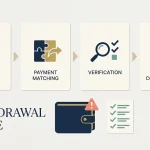
Why a Withdrawal Can Trigger Further Checks
A withdrawal request does not cancel the identity checks a UK-licensed casino must complete. If the operator has not finished verifying your account, it may need to do so before releasing funds. A promise that a casino will pay out without ID cannot override that duty.
The request can bring account details into focus because the operator must ensure it is paying the right customer. If the information on your account is incomplete, inconsistent or needs confirmation, the casino may ask you to provide evidence before it proceeds. This is a verification step, not proof by itself that anything is wrong with your account.
That distinction matters when you see claims about no-ID withdrawal casinos in the UK. “No documents requested so far” describes what has happened up to that point; it does not establish that documents will never be required. The operator remains responsible for meeting its UKGC obligations, even if a payment method or the casino’s own wording suggests a simple payout.
Read the withdrawal terms before playing, including any explanation of pending payments and identity checks. Keep your account information accurate, and respond through the casino’s stated process if it requests verification. Do not assume that a withdrawal can be completed merely because you were able to request one.
If you disagree with how a casino handles a withdrawal or its checks, use its internal complaints process. UKGC licensees must also provide access to an approved Alternative Dispute Resolution service. A credible operator should make those routes identifiable; a claim of “no ID” is not a substitute for them.
Free Spins and No-ID Offers: Read the Conditions
A free-spin promotion and an identity-check policy are separate parts of an account. A bonus may change what you can play or how winnings are treated; it does not establish that a casino can let you open an account or gamble without checks. Read the offer terms as conditions attached to the promotion, not as an exception to verification.
Check what triggers the spins. A specialist review reports that some bingo rooms have offered a slot spin for each bingo ticket purchased. That is a specific offer arrangement, not a general feature of casino promotions. The operator’s own terms should say whether a qualifying ticket is required, which game the spin applies to, and when it must be used. Do not assume that the word “free” means no purchase or other condition.
Then trace what happens to any winnings. The terms should explain whether spin winnings are credited as cash or bonus funds, whether a wagering requirement applies, which games count towards it, and whether any expiry or withdrawal conditions apply. If the wording is unclear, ask the operator to clarify it before you opt in; keep a copy of the offer and response.
Treat claims of “no ID” cautiously when they appear beside a free-spin offer. A promotional page cannot remove the operator’s identity and age-check obligations. If the offer suggests that accepting spins means you can avoid required checks, that is not a reliable description of how a UK-licensed casino works. Check the actual terms and the operator’s UKGC licence number, and verify the number on the UKGC public register before depositing.
A promotion is only useful if you understand its trigger, eligible games and withdrawal conditions. If those details are absent or conflict with the claim that no verification is needed, do not rely on the headline wording.
How long do online casino withdrawals take in the UK?
E-wallet withdrawals typically take up to 24 hours to process once the operator releases the funds.
When is the best time to play for smaller prize pools?
Try playing outside the 7pm–11pm peak period, when bingo operators schedule their largest prize pools.
What is a wagering requirement?
It is the amount you must spend on eligible play before you can withdraw bonus-related funds. For example, a £40 bonus with a 4x requirement needs £160 in eligible bingo ticket spending.
Are online bingo winnings taxable in the UK?
No. Online bingo winnings are not taxable for recreational players in the UK.
How do I know if an online bingo site is safe?
Check that the operator holds a UK Gambling Commission licence for offering services to UK players. Licensed operators must meet requirements covering fairness, anti-money laundering and responsible gambling.
Casino Games

Aviator Casino Game in the UK: Sites and Play
A practical guide to UK licensing, play modes, casino checks, bonus conditions, crypto payments and...

3-Reel Slots in the UK: Browser Play Explained
Three-reel games use software to apply each spin’s rules, while the browser displays the reels,...

5-Reel Slots in the UK: Demos, Layouts and Play
Five-reel games share a layout of five vertical reels, while their features, volatility and ways...

Bonus Buy Slots UK: Features, Rules and Play
A practical guide to bonus-feature costs, demo mode, slot volatility, Great Britain stake rules and...

UK Casino Payouts: Fast Withdrawals and Keno Returns
Learn how keno’s expected return differs from individual results and what information is needed to...

UK First-Deposit Casino Bonuses: How Offers Work
First-deposit offers can differ in how rewards are credited and used, so the terms define...

High-Volatility Slots in the UK: Bet and Payout Guide
A practical guide to reel-wide bets, payout patterns, RTP limits and the session choices that...

Online Keno Casinos in the UK: Games and Odds
Online keno uses an RNG to draw numbers from a card numbered 1 to 80,...

Live Casino UK: How Games, Rules and Bonuses Work
Live casino combines a dealer's video feed with controls for betting and decisions, while rules...

Best Low-Volatility Slots in the UK: What to Know
See how payout frequency, win size and RTP contribute to a slot’s overall pattern, and...

Online Slot Payout Percentage: How RTP Works
RTP describes a game's theoretical long-run return, while individual spins and sessions can produce very...

Best RTP Casino Slots in the UK: How Returns Work
RTP describes a theoretical long-run return, not a promised payout or guide to when wins...

Video Slots in the UK: Stakes, Features and Free Play
A practical guide to reel outcomes, stake displays, bonus features, browser play and checks to...

Casino Dice Game UK: Rules, Formats and Licensing
Explore dice-game mechanics, demo limits, Bitcoin options and the licensing checks relevant to online casino...

Chicken Road Game in UK Casinos: How It Works
The guide distinguishes stake-based outcomes from branding and explains why the title alone cannot confirm...

Crash casino games in the UK: rules and checks
Crash is a format label, not a standard rule set; availability, payment options, demos and...

Crazy Time Live Casino Game in the UK
A practical guide to the live stream, betting controls, casino-site checks and the limits of...

Deal or No Deal Casino UK: Game and Play Guide
The show’s case-by-case decisions are explained alongside checks on demos, bonuses, free spins and online...

Fastest payout online casino UK: what evidence shows
A look at what payout-speed evidence can show and how keno draws, matches and paytables...

French Roulette Online Casinos in the UK: Rules & Play
French roulette’s zero rules can change the cost of an even-money bet, while table formats,...

Hi-Lo Casino UK: Rules, Strategies and Site Checks
Learn how higher, lower and matching-card rules shape a round, and what to compare across...

High-RTP Slots in the UK: How Returns Work
RTP describes a game's theoretical return across repeated play, while individual outcomes can vary from...

JetX casino game in the UK: labels and access
A game’s name or listing does not establish its mechanics, category, demo options or availability...

Live Baccarat Online Casino UK: Rules and Tables
Follow the hand from the opening deal to the final comparison, then weigh table formats,...

Live Blackjack Online Casino UK: Rules and Tables
A practical guide to UK licensing checks, table rules, stakes, live formats and how decisions...

Live Casino Lightning Roulette UK: How It Works
A practical guide to the live studio, betting interface, roulette wheel types and the limits...

Live Dream Catcher Casino UK: How It Works
Live dealer play pairs a real-time studio stream with on-screen betting, while table pace and...

Live Roulette UK with English-Speaking Dealers
Live roulette pairs a dealer and physical wheel with an online betting interface, while rules...

Mines Casino Game in the UK: Rules and Risks
A clear look at how game rules, random outcomes, demos and simulator results shape what...

Monopoly Live Casino UK: Format and Online Play
Monopoly Live combines a real-time dealer stream with digital betting controls, so the stream and...

Online Bingo in the UK: Formats, Slots and Play
See how ticket layouts and winning patterns shape bingo play, and how slot games, offers...

American Roulette Online Casinos in the UK: Rules & Odds
Learn how the double-zero wheel differs, how bets and payouts work, and what to check...

European Roulette at UK Online Casinos: Rules & Bets
A practical guide to the single-zero wheel, table bets, payouts, free and real-money play, and...

Online Casino Games for Real Cash in the UK
A practical guide to slot mechanics, real-cash offers, bonus conditions and the rules and payout...

Online Casino Tournaments UK: Formats and Scoring
Slot tournaments can use single or elimination rounds, with rules governing scores, entry, prizes and...

Plinko Casino UK: Games, Real Money and Regulation
A guide to assessing Plinko availability, UK casino status and the conditions attached to play....