Safe Online Casino UK: Licence, Checks and Risks
 Available in GB

A UKGC licence establishes a legal baseline, while identity checks, payments, game rules and safer-play tools help explain what else to assess.
Table of Contents
- What a UK Casino Licence Actually Protects
- How to Check an Operator’s Licence and Identity
- What Makes a Casino Site Safer for UK Players
- How to Assess Reliability Beyond the Licence Badge
- Real-Money Play, Bonuses and the Turnover Calculation
- Payments, Withdrawals and Verification Before Cashing Out
- How Slot Rules Affect the Pace of Play
- Licensed Casinos, Live Play and Crypto Withdrawals
- What “Best” Should Mean When Comparing UK Casinos
- Security, Self-Exclusion and What Happens Outside UKGC Oversight
What a UK Casino Licence Actually Protects
A UKGC licence is the regulatory starting point for judging whether an online casino is operating legally for players in Britain. The UK Gambling Commission regulates gambling operators serving British players, and a casino must hold its licence to offer gambling legally to UK players. That establishes who is responsible for operating within the British regulatory system; it does not make gambling risk-free.
The distinction matters because “safe” can describe several different things. A licence addresses the operator’s legal status and regulatory obligations. It does not mean that every game will produce a favourable result, that you cannot lose money, or that every part of an individual customer experience will be trouble-free. A licensed casino is still a gambling business, and the outcome of a game is not made predictable by the operator’s regulatory status.
Think of the licence as a threshold, not a verdict on every detail. If a casino does not have the required UKGC licence, it is not a legal online casino for UK players. If it does have one, you have established an important baseline: the operator is authorised within the system that regulates gambling for the British market. You have not thereby proved that a particular site is suitable for you, or that every feature and interaction will meet your expectations.
Online Casino No Registration UK: How Checks Work
That is why a safe online casino in the UK cannot be identified by a reassuring word or a polished presentation alone. A licence is meaningful because it connects the operator to a regulator and a defined legal framework. Without that foundation, claims about safety have no equivalent UKGC authorisation behind them. With it, you can assess the site on the basis that the operator is subject to British regulation—but still need to understand what that does and does not cover.
The licence also should not be treated as a guarantee against personal harm. Gambling can involve losses, and a player’s own circumstances affect whether participation is appropriate. Regulatory status cannot remove those risks or ensure that a session will remain enjoyable. The useful question is narrower: does the casino have the legal authorisation required to serve players in Britain? That question comes before judging whether its arrangements suit your needs.
Trustworthy Online Casinos in the UK: What to Check
This is the difference between a regulatory foundation and an individual assessment. The licence tells you that the operator is inside the relevant regulatory system; it does not, by itself, answer every question about a specific website or how it will work for you. Nor should the presence of a licence be read as a recommendation. It is a condition of legal operation, not a personal endorsement.
For a reader comparing safe UK online casinos, keeping those boundaries clear prevents two opposite mistakes. One is to assume that a licensed casino must be harmless in every respect. The other is to treat the licence as a decorative badge with no practical significance. It is neither: it is a necessary legal baseline, but only a baseline.
The next step in assessing a particular casino is to establish that the licence claim belongs to the operator and site you are considering. That is a separate verification task. Later, you can consider the protections and controls available when using an account. Keeping these stages distinct makes the licence easier to interpret: it answers whether the operator is authorised to serve the market, not whether every aspect of play is safe for every person.
£1 Minimum Deposit Casinos in the UK: How They Work
How to Check an Operator’s Licence and Identity
Before depositing, verify the operator against the UK Gambling Commission’s public register. A licence badge on a casino site is only a claim made by that site; it does not show by itself that the licence is current or covers the website you are using.
Start with the licence information on the casino’s website. Note the UKGC licence number, the trading name and the legal business name. The licence information should include a working link to the Commission’s official public register. Open that link and check the register directly rather than relying on a screenshot, copied text or a search result.
Search the register using the licence number where possible. Then compare the entry with the site’s details. Check that the registered trading name and legal business correspond to the names given by the operator. A brand may differ from the company name, so do not treat different wording as proof of a problem by itself; look for a clear connection between the brand, the registered business and the licence.
Verify Operator Licence
Step 1: Collect details
Note the UKGC licence number, trading name, and legal business name from the casino’s website.
Step 2: Access the register
Follow the link to the official Gambling Commission public register rather than relying on screenshots.
Step 3: Search and compare
Search by licence number and verify that the trading name and legal business match the operator’s details.
Step 4: Confirm the domain
Check that the exact website domain you are using is covered by the register’s entry.
Next, compare the exact website domain. Read it carefully, including its spelling and ending, and make sure the register’s entry covers the domain you intend to use. A licence held by a company does not establish that every site using a similar brand name is connected to it. A lookalike address, a small spelling change or a different domain can lead to a different operator.
Treat any mismatch as unresolved until you can confirm it through the register or the operator’s own licence information. If the number returns no relevant entry, the entry names a different business, or the website domain is not accounted for, do not deposit on the assumption that a badge proves the connection. Contact the operator for clarification, then check the answer against the register rather than accepting a generic statement that it is licensed.
This process helps you identify whether a particular casino site is associated with a verifiable UKGC licence. It is more reliable than judging a site by its design, brand familiarity or claims such as “licensed” without a matching register entry. It also makes comparisons more precise: you are checking the operator behind the exact site, not just whether a similarly named company appears in the register.
A practical check therefore has four parts: the licence number, the website domain, the trading name and the legal business. All should fit together in the Commission’s records and the operator’s own licence information before you fund an account. If you cannot establish that connection, pause rather than treating uncertainty as confirmation.
UK Online Casino Payouts: RTP and House Edge · £2 Minimum Deposit Casinos in the UK: What to Check
What Makes a Casino Site Safer for UK Players
A safer casino site is one where protections can be understood before you hand over personal information or money. A polished design, a familiar game catalogue or a reassuring label does not explain how the operator handles your account. Look instead for clear rules, visible safeguards and information that lets you understand what will happen when you register, play or need help.
Player funds are one part of that assessment. UKGC-licensed operators must keep player funds separate from the capital they use to run the business. This segregation creates a distinction between customers’ money and the operator’s operating funds. It is a required safeguard, but it should not be read as a promise that funds are risk-free in every circumstance. Check how the operator describes the arrangement and whether its terms explain what protection it provides.
Age checks are another basic part of site safety, and they apply earlier than some players expect. On licensed platforms, an operator must verify your age before letting you access gambling-related content, including free game demos. It must also verify your age before allowing you to deposit. A demo may not involve a cash stake, but it is still gambling-related content; free access does not remove the age-verification requirement. If a site lets you browse or use such content without the required check, that is a reason to pause rather than treat the absence of friction as convenience.
Read the site as a set of rules
Before registering, find the pages that explain account use, privacy, complaints and responsible gambling. These should be accessible and specific enough to tell you what the operator expects from you and what you can expect in return. Look for rules written in a way that distinguishes the operator’s obligations from your own. If important terms are difficult to locate, vague, or inconsistent across pages, you have less information with which to make a decision.
Do
- Look for specific rules on account use and privacy
- Check for clear explanations of how protections work
- Verify that terms are accessible after registration
Don’t
- Rely on broad assurances like “account is secure”
- Accept general claims about fair treatment
- Trust a site if key terms are vague or inconsistent
The wording matters because broad assurances do not tell you how a protection works. A statement that an account is secure, for example, is less useful than a clear explanation of how personal information is handled and where to find the relevant privacy terms. Similarly, a general claim about fair treatment does not explain the process for raising a complaint. The point is not to treat every legal page as proof of good practice; it is to see whether the site gives you usable information before you commit.
Check that the pages remain available after registration as well. A protection is more useful when you can find its terms and controls from within your account, rather than only through a promotional page. If the site’s instructions send you in circles or leave key terms unexplained, contact customer support and assess whether the answer is clear and consistent with the published rules.
Look for practical control, not just reassuring language
A safer site should make it possible to understand the choices attached to your account. Before your first deposit, remote operators must prompt new customers to set a financial limit and provide accessible account-level limit controls. Notice whether the prompt is clear and whether the controls are straightforward to locate. A tool that exists but is difficult to find is less useful in practice than one you can identify and operate without guesswork.
Merkur Casino Online UK: Games, Demos and Checks
The same principle applies to information about games. You should be able to distinguish a free demo from real-money play and understand when a game involves a stake. Clear presentation helps prevent accidental confusion between trying a game and risking money. It also makes it easier to stop and review what you are doing before moving from browsing to play.
A site’s visible protections should fit together. Age checks establish who may access gambling-related content and deposit; account controls give you ways to set boundaries; and clear terms explain the operator’s processes. No single feature makes a site safe in every respect. Assess whether the protections are presented clearly and whether the steps you are asked to take match the rules the site publishes.
Treat any summary as a prompt to inspect the operator’s own information. The relevant question is whether you can understand the protections and use them, not whether a site’s presentation sounds reassuring.
Castle may receive a commission if you register with a partner casino through this site. That commercial relationship does not change the need to assess the operator’s protections independently. Read the terms and safeguards yourself, and do not treat a favourable description as a substitute for checking how the site works.
How to Assess Reliability Beyond the Licence Badge
A UKGC licence establishes that an operator is subject to British gambling rules. It does not tell you exactly how its account controls behave, how a decision will affect your access to play, or whether its processes will feel clear when you use them. To assess reliability, look at how the operator manages changes in your activity and explains what it needs from you.
Affordability Checks
UKGC-licensed platforms must request income verification from players who meet certain criteria; continued access to gambling may depend on responding to these requests.
One practical test is whether financial controls are part of the account rather than difficult to find after registration. Remote operators must prompt new customers to set a financial limit before their first deposit and provide accessible account-level limit controls. A clear process lets you set a boundary before play begins and review or adjust your settings within the account. If the controls are hard to locate or their effect is unclear, you have less ability to manage your own activity.
Affordability checks are a separate safeguard. UKGC-licensed platforms must request income verification from players who meet certain criteria under enhanced checks. The spending thresholds that trigger these checks are not disclosed, so you cannot reliably predict whether or when a request will appear. The practical point is that continued access to gambling may depend on responding to a request for income information. An operator should explain what it is asking for and how the check affects your account; do not treat a licence as a promise that no further questions will be asked.
These checks are not the same as routine identity verification. Identity checks establish who holds an account, while affordability checks concern whether a player’s circumstances meet the operator’s criteria. If the operator asks for information, read the request carefully and use the account’s stated process. Do not assume that a check has been completed simply because you were able to open or use the account earlier.
For a safe and reliable casino experience, assess the account as a working system. Can you find the limit controls without searching through unrelated pages? Does the operator explain what happens when it requests information or applies a restriction? Are the available controls understandable on the device you use, including a mobile screen? These checks do not prove how every future decision will be handled, but they help you judge whether important processes are visible and usable.
Anjouan casino licence: what it means in the UK
Casino reviews can help identify what to inspect, but a review cannot establish how an operator will assess your individual circumstances. Treat claims about smooth account management as claims to verify, not guarantees. A regulated online casino remains responsible for applying the required safeguards even when they interrupt access or require you to provide further information.
When deciding how to choose a safe and reliable online casino, separate the evidence into two parts: the licence establishes regulatory oversight; the account experience shows how controls and requests are presented to you. Neither alone proves that every interaction will be effortless. If a financial limit is required before your first deposit, set one you can maintain, and make sure you know where the account controls are before you begin playing.
Real-Money Play, Bonuses and the Turnover Calculation
A bonus balance is not necessarily available to withdraw as soon as it appears in your account. If an offer has a wagering requirement, you must place qualifying stakes until the required turnover is reached. The requirement is a multiplier applied to a stated base: either the bonus alone or the deposit and bonus together. Those bases can produce substantially different totals, so check which one the offer uses before accepting it.
For a compliant incentive, the wagering requirement must not exceed 10x. Consider a £100 deposit that earns a £100 bonus. At 10x on the bonus alone, qualifying stakes must total £1,000. If 10x applies to the combined £200 deposit and bonus, the required turnover is £2,000. The multiplier is unchanged; only the amount it is applied to changes. This is why the phrase “10x wagering” is not enough to tell you how much play is required.
Calculating Wagering Requirements
A 10x requirement on a £100 deposit and £100 bonus differs based on the base: 10x on the bonus alone requires £1,000 in qualifying stakes, while 10x on the combined total requires £2,000.
Turnover is the sum of qualifying stakes, not the amount you have to lose. A stake can count towards the requirement even if the game returns some or all of it, subject to the offer’s rules. Conversely, a game or bet may count only partly, or not qualify at all. Check the terms for eligible games, contribution rates, excluded bets and any conditions attached to the bonus balance. Reaching the turnover figure does not itself promise a profit; it means only that the stated wagering condition has been met.
Game contribution affects how quickly eligible play accumulates. A specialist review describes slots as contributing the full stake, while table-game contribution can be lower; the terms for the particular offer determine what counts. If a game contributes only part of each stake, you need more actual betting to produce the same qualifying turnover. For instance, a £10 stake that counts at half value adds £5 towards the requirement, not £10. Treat the operator’s published contribution table as part of the offer, rather than assuming every game advances it equally.
Also check the maximum eligible stake while bonus credit is active. A specialist review reports a £5-per-spin cap at many operators, but this is not a universal term: the offer itself controls. Exceeding a stated cap can breach the conditions and may affect bonus eligibility or winnings. Do not raise stakes simply to complete turnover faster without checking the rule that applies to that bonus.
A single incentive must not combine more than one gambling product. In practical terms, an offer cannot bundle wagering across categories such as casino and betting; its conditions should identify the product to which it applies. This limit does not mean every game within that product qualifies, so game-level exclusions and contribution rules still matter.
Curaçao Casino Licence UK: What Players Should Know
A no deposit bonus can also carry a wagering requirement, even though you did not make a deposit to receive it. Read the base amount, multiplier and withdrawal conditions in the same way as you would for a welcome offer. For a deposit-matched bonus, distinguish your deposited funds from bonus funds and check how each is treated while wagering is incomplete. Some terms restrict access to the bonus balance or require qualifying play before winnings can be withdrawn.
Before opting in, calculate the turnover from the stated base and multiplier, then check how each intended game contributes and whether a stake cap applies. If the terms do not make those points clear, the value of the offer cannot be assessed from its headline amount alone. A safe casino welcome bonus is one whose conditions you can understand before accepting it—not simply one that advertises a large match.
Payments, Withdrawals and Verification Before Cashing Out
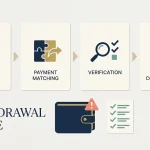
A payment can be accepted as a deposit and still require further checks before a withdrawal is released. Licensed operators must verify your identity before processing withdrawals, so leaving document submission until you request a cash-out can create an avoidable delay. Complete verification after opening the account and before funding it, then check that the submitted details match the information on your account.
The standard documents are a government-issued photo ID, such as a passport or driving licence, and proof of address dated within the previous three months, such as a utility bill or bank statement. An operator may also ask you to confirm that you own the payment method used. These checks connect the account holder, the address and the source or destination of funds; a mismatch can prompt a request for clarification rather than an immediate payment.
Withdrawal Preparation
- Submit government-issued photo ID
- Provide proof of address dated within three months
- Confirm ownership of the payment method
- Ensure account details match submitted documents
Submit clear, current documents through the operator’s designated account process and follow any instructions about what must be visible. If you use a payment method in another person’s name, or the account details differ from your documents, do not assume the operator will be able to process a withdrawal without asking for more information. Keep copies of any messages about outstanding checks so you can see what remains to be resolved.
Deposit rules also affect which routes you can use. UK casino operators have been barred from taking credit-card payments for gambling since April 2020. The restriction also covers credit-card funding routed through a money service business and wallet payments where the wallet can use credit-card funds for gambling. A payment interface displaying a familiar card or wallet brand does not, by itself, show which funding source is being used; check the method’s terms and the operator’s deposit conditions.
For a bank transfer, allow for the time taken by the transfer itself as well as any account checks. A specialist review of payment methods across the brands it examined reported bank-transfer processing periods of 3–5 banking days. That is a reported range from the reviewed operators, not a promise that every transfer will arrive within it. The operator may also need to complete verification before releasing a withdrawal, so the payment route and the status of your documents are separate parts of the process.
Before confirming a deposit, read the cashier’s instructions for that method and note whether the operator requires you to withdraw through the same route or provide additional ownership evidence. Before requesting a withdrawal, check that your identity and address documents have been accepted and that the payment method is recorded correctly. This will not control transfer processing time, but it can prevent missing or inconsistent information from becoming an additional cause of delay.
Gibraltar Casino Licence in the UK: What to Check
How Slot Rules Affect the Pace of Play
The pace of an online slot session depends partly on how quickly one spin can follow another and whether the game can start spins without a fresh action from you. In Great Britain, rules for UKGC-licensed slots constrain both. Autoplay was removed from these games in 2021, and each spin must last at least 2.5 seconds.
Without autoplay, you cannot set a licensed slot to repeat spins automatically. You must initiate each spin yourself. That creates a pause in which you can decide whether to continue, but it does not force you to stop or assess your spending. If you keep pressing the spin control, the session can still continue for as long as you choose.
The minimum spin duration sets a separate limit on speed. A game cannot complete a spin and begin another immediately: the required interval slows the sequence and was introduced to reduce session intensity. It does not determine the result of a spin, change the game’s underlying rules or make a particular slot safe to play. It affects how quickly rounds can occur, not whether you will win.
These controls are relevant when you assess claims about safe online casino games in the UK. A slot’s interface may look similar across different sites, but the pace rules depend on the regulatory framework under which the operator offers it. On a UKGC-licensed platform, online slot autoplay is prohibited and the minimum spin duration applies. An app does not change those rules: what matters is whether the gambling service is operating under a UKGC licence, not whether you access it through a browser or an app.
Unregulated Sites
Sites operating outside UKGC oversight may offer autoplay and lack minimum spin speeds, meaning they do not provide the same regulatory safeguards as licensed operators.
A site operating outside UKGC oversight may offer a different experience. At non GamStop casinos, autoplay functions remain active and there is no regulatory minimum speed for spins. That can allow rounds to follow one another faster than on a UKGC-licensed slot. It is not equivalent UK protection: remote operators serving Great Britain must hold a UKGC licence, and a site outside that system does not provide the same regulatory safeguards.
The practical distinction is therefore about control of the game’s pace. On a licensed slot, you must start each round and the game must observe the minimum interval. Outside that framework, the game may automate repeated spins or move more quickly. Neither faster play nor a manual button tells you whether the site is safe; pace rules are one specific protection, not a complete measure of operator conduct or player risk.
If you are comparing casino apps or browser games, check which regulatory framework applies before treating their slot features as comparable. The same game format can behave differently under different rules. A slower pace may give you more opportunity to pause, but it cannot replace your own decision to stop playing.
Casinos Without a UK Licence: Rules and Risks
Licensed Casinos, Live Play and Crypto Withdrawals
A live dealer table and a slot game may look like different products, but the format does not change the licensing test. If an operator offers real-money gambling to customers in Great Britain, it must hold a UKGC licence. That applies whether you play against a live dealer, use a streamed table or choose a game supplied by a studio. A live video feed is not a separate form of protection: the operator’s regulatory status still determines which safeguards and complaint routes apply.
This matters when a site advertises a broad choice of live games alongside Bitcoin deposits or withdrawals. A payment method does not establish that the casino is licensed to serve British players, and a live table does not make an offshore operator equivalent to a UK-regulated one. Offshore regulators differ, and a licence from outside the UK does not give you the protections attached to a UKGC licence. Offshore licences also do not necessarily provide the same degree of player protection as a UKGC or Malta Gaming Authority licence.
Non GamStop casinos operating under offshore licences are not required to connect to GAMSTOP. That absence is not a minor difference in a live casino’s terms: it means you should not treat the platform as part of the UK self-exclusion system. If the operator has no identifiable UKGC licence, its live games and payment options should not be presented as UK-regulated services.
Attention: A foreign licence does not create UKGC protections, and non GamStop casinos operating under offshore licences are not required to connect to the UK self-exclusion system.
Crypto withdrawals have a separate timing component. A specialist review reports that, after the operator has processed a withdrawal, an on-chain transfer may take 10–30 minutes to settle. That estimate describes the blockchain stage, not the full time from requesting a withdrawal: operator review happens first, and the reported interval is not a guaranteed settlement time. Network conditions and the operator’s processing stage should therefore be considered separately when reading a claimed payout speed.
For Bitcoin, check which stage a stated timeframe covers. “Processed” may mean the casino has approved and sent the transaction, while “settled” refers to confirmation on the network. Those are not interchangeable events. The distinction is useful for any crypto casino, but it does not answer the more important question of whether the operator is authorised for Great Britain.
When comparing live play and crypto options, treat them as features to assess only after the licensing scope is clear. A polished studio, familiar game provider or visible Bitcoin option cannot substitute for UKGC oversight. Nor does a foreign licence create UKGC protections simply because the site accepts British customers. The format tells you how the game is delivered; the licence tells you which regulatory framework applies.
What “Best” Should Mean When Comparing UK Casinos
When choosing a safe online casino in the UK for 2026, check the available facts carefully and consider what matters to you. The payout information below gives you one practical detail to review for each listed operator.
1. Amunbet
Payout speed: 1-3 business days Amunbet lists a payout speed of 1–3 business days. Use this as one factor when deciding whether it suits your expectations.
2. NightWin
Payout speed: 1-3 business days NightWin lists a payout speed of 1–3 business days. This gives you a stated timeframe to consider when reviewing the operator.
3. SlotoSport
Payout speed: 1-3 business days SlotoSport lists a payout speed of 1–3 business days. You can use that information as part of your own assessment.
4. Britsino
Payout speed: 1-3 business days Britsino lists a payout speed of 1–3 business days. Consider this stated timeframe alongside the factors that matter to you.
5. EvoSpin
Payout speed: 1-3 business days EvoSpin lists a payout speed of 1–3 business days. This is the available payout detail to bear in mind when assessing the operator.
6. x3bet
Payout speed: 1-3 business days x3bet lists a payout speed of 1–3 business days. You can factor this stated timeframe into your decision.
7. SpinFormula
Payout speed: 1-3 business days SpinFormula lists a payout speed of 1–3 business days. Treat it as one practical detail to consider when reviewing the operator.
8. WinBeast
Payout speed: 1-3 business days WinBeast lists a payout speed of 1–3 business days. This gives you a stated timeframe to take into account.
9. Dieselwin
Payout speed: 1-3 business days Dieselwin lists a payout speed of 1–3 business days. Consider this payout information as part of your own assessment.
10. Jetsetspins
Payout speed: 1-3 business days Jetsetspins lists a payout speed of 1–3 business days. You can use this stated timeframe as one factor in deciding whether it fits your preferences.
“Best” is not a single property of a casino. It depends on whether the operator’s protections can be verified and whether they fit the way you intend to play. A comparison is useful when it shows the evidence behind its judgements, rather than presenting a score or label as proof of safety.
Start with the UKGC licence entry. The licence information should sit beside a working link to the regulator’s official register. Check that the entry corresponds to the casino’s exact website domain, trading name and legal business. A badge, copied licence number or general statement about regulation is not enough if the register does not support the connection. If the identity cannot be matched, treat the operator as unverified rather than filling the gap with assumptions.
Then compare how clearly each site explains its protections and account controls. Look for terms that tell you what the operator does, when a control applies and how you can use it. Vague claims such as “secure” or “player-focused” are difficult to assess because they do not describe a mechanism. A useful comparison separates verifiable safeguards from promotional features and makes clear where information is unavailable.
The same standard applies to comparison tables. Ratings should reflect stated criteria, not imply that one brand is universally safest. Read any verdict alongside the evidence and note whether it addresses the specific point you care about. If a table gives a strong rating but does not show how that conclusion was reached, the rating adds little.
A careful approach to finding a safe online casino in the UK is therefore to compare evidence, not adjectives. The strongest choice for you is the one whose identity and protections you can verify and whose terms you understand before opening an account.
Offshore casinos for UK players: rules and risks
Security, Self-Exclusion and What Happens Outside UKGC Oversight
On a UKGC-licensed platform, account controls give you ways to interrupt or restrict play. Before your first deposit, the operator must ask you to set a financial limit; you should also be able to find and change account-level limits. A deposit limit constrains how much money can enter your account over the period you select. A time-out temporarily blocks access, while self-exclusion is intended for a longer break from gambling. UKGC-licensed operators must also connect self-exclusion to GamStop, which lets you exclude yourself across participating licensed gambling businesses rather than relying on a restriction at one casino alone.
These controls reduce access or spending opportunities; they do not make gambling risk-free, and they cannot undo losses already incurred. Check that the controls are accessible in your account and understand what each one restricts before relying on it.
The distinction matters when a site’s UKGC status cannot be matched to an identifiable entry in the Commission’s register. A badge or general claim is not enough to establish that the operator is within the UK system. Without a verifiable licence entry, do not assume that a GamStop exclusion will block the account, that you can use UKGC-regulated alternative dispute resolution, or that UK-specific protections for customer funds apply. Non GamStop casinos sit outside UK dispute resolution channels, so a complaint may not have the same route for review as it would with a UKGC-licensed operator.
A site can describe its own limits or complaint process, but those statements do not establish UKGC oversight. For a safer online casino experience, treat the regulator’s identifiable record and the protections attached to it as separate checks: account tools help manage your play, while regulatory status determines which UK safeguards and routes for recourse you can rely on.
Is it safe to play at online casinos in the UK?
A UKGC licence is an important legal baseline, but it does not make gambling risk-free or guarantee that you will not lose money. Check the operator and exact website domain on the Commission’s public register before depositing.
What exactly are non-GamStop casinos and are they legal in the UK?
Non-GamStop casinos operate outside the UKGC system and are not required to connect to GamStop. A casino must hold a UKGC licence to operate legally for players in the UK, and offshore sites do not provide the same UK protections or dispute-resolution channels.
What responsible gambling tools can I use?
At UKGC-licensed casinos, you can use deposit limits, time-outs and self-exclusion through GamStop. Non-GamStop operators are not required to connect to GamStop.
Casino Sites

£1 Minimum Deposit Casinos in the UK: How They Work
A £1 cashier minimum may depend on the payment method, and does not automatically qualify...

£10 Minimum Deposit Casinos in the UK: How It Works
A cashier minimum sets the smallest accepted payment; it is not a guide to how...

£2 Minimum Deposit Casinos in the UK: What to Check
A low account deposit may not meet the separate rules for a payment method, promotion,...

£20 Minimum Deposit Casinos in the UK: How They Work
A cashier minimum applies to the funding transaction, while game stakes follow the rules and...

£3 Minimum Deposit Casinos in the UK: What to Check
A cashier threshold can vary by payment method and does not determine bonus eligibility, withdrawal...

£4 Minimum Deposit Casinos in the UK: What to Check
A cashier minimum is only an entry condition; payment methods, account rules and promotion terms...

£5 Minimum Deposit Casinos in the UK: How They Work
See how the cashier minimum works and how it relates to payment methods, bonuses and...

Anjouan casino licence: what it means in the UK
Anjouan licensing sets the operator’s regulatory basis, but does not itself authorise gambling services for...

Best casino app UK: how mobile play works
See how casino apps differ from browser play, and what to check about payments, bonus...

Foreign Casinos for UK Players: Licensing and Risks
The guide explains how foreign casinos relate to UK rules and what licensing, payment terms...

International Casinos for UK Players: Key Checks
An overview of licensing, player protections, bonuses, payments and the legal considerations that distinguish international...

Pay by Phone Credit at UK Mobile Casinos
Phone-credit deposits use a mobile account to fund a casino balance, while payment availability, fees...

Offshore casino sites for UK players: rules and risks
This guide explains licensing limits, listing caveats, payment and withdrawal risks, and how offshore sites...

Offshore casinos for UK players: rules and risks
Explains how offshore operators sit outside UKGC regulation and what that can mean for access,...

British casinos not on GamStop in 2026: key facts
GamStop applies to UKGC-licensed operators, while offshore licensing and site terms require separate checks. How...

Casino No ID Verification UK: How Checks Work
A lack of document requests at sign-up does not mean an account is verified or...

Casino Sites Not Registered with GamStop in the UK
GamStop applies to UKGC-licensed operators; overseas licensing, voluntary safeguards and casino terms can differ. What...

Casinos Without a UK Licence: Rules and Risks
An overseas operator’s location does not determine whether it needs a UKGC licence to offer...

Casinos That Bypass GamStop: How It Works
GamStop applies to participating UKGC-licensed operators; a site outside the service may operate under a...

Curaçao Casino Licence UK: What Players Should Know
A Curaçao licence identifies a licensing jurisdiction, but does not establish that a casino is...

Gibraltar Casino Licence in the UK: What to Check
A Gibraltar connection or favourable ranking does not establish which authority oversees a casino or...

Merkur Casino Online UK: Games, Demos and Checks
A practical guide to spin mechanics, demo sessions, site checks, bonus terms and the limits...

Trustworthy Online Casinos in the UK: What to Check
A practical framework for checking licensing, player safeguards, verification, games and payments before opening an...

No Account Casinos in the UK: How They Work
The label describes a sign-up or payment journey, but does not explain how a casino...

No-ID Verification Withdrawals at UK Casinos
The guide distinguishes document-free sign-up claims from later checks, and explains how verification can shape...

No Minimum Deposit Casinos in the UK: What £1 Means
A low cashier minimum does not guarantee a bonus or determine how much you can...

Non-Gamban Casinos in the UK: What the Label Means
A site's accessibility on one device does not verify its licence, safety or general relationship...

Non-GamStop Curacao Casino Sites: UK Guide
A practical framework for checking licensing claims, payment methods and self-exclusion coverage without treating them...

Non-GamStop European Casinos: UK Exclusion Explained
GamStop covers participating online gambling businesses, while individual casino closures and sites outside the scheme...

Non-UK Licence Casinos: What the Licence Means
Licences from Malta and other jurisdictions apply under their own regulators and are not the...

Non-UK-Registered Casinos: Regulation Explained
A guide to UKGC oversight, offshore licensing, self-exclusion, payments and checks that help assess an...

Non-UK-Regulated Casinos: UK Rules and Risks
UKGC status depends on the operator and the market it serves, not merely on whether...

Non-UKGC-Licensed Casinos: Rules and Risks
A guide to licensing, player protections, self-exclusion and payments when a casino operates outside UKGC...

Malta-Licensed Online Casinos and UK Gambling Rules
A Malta licence covers an operator’s Maltese authorisation, while serving customers in Great Britain requires...

Online Casino No Registration UK: How Checks Work
The label may describe a shorter sign-up, but it does not remove the requirement to...

Online Casinos Without Sister Sites in the UK
Sister-site connections can involve shared ownership or technology, and do not necessarily mean that brands...

Online Slots Not on GamStop: What the Label Means
GamStop applies to participating gambling establishments, not individual games, so labels and site claims need...

UK Online Casino Payouts: RTP and House Edge
RTP, house edge and game-specific figures describe long-run returns, not a guaranteed result from any...

Trusted Casinos Not on GamStop UK: What to Check
Understand the limits of trust claims and examine licensing, player protections, bonus conditions and withdrawal...

Trusted UK casinos: checking licences and safeguards
A practical look at UK licensing, public-register checks, enforcement history and the protections available across...

USA Casinos for UK Players: What to Check
A US connection or an accessible website does not establish that an operator is authorised...

VPN-Friendly Casinos in the UK: Rules and Access
A VPN-friendly label describes an operator’s approach to VPN connections, not a guarantee of access...