No Account Casinos in the UK: How They Work
 Available in GB

The label describes a sign-up or payment journey, but does not explain how a casino identifies customers or handles withdrawals.
Table of Contents
- What “No Account” Changes—and What It Does Not
- Who Regulates Online Casinos in Great Britain
- How to Read a No-Account Casino Offer Before You Use It
- No-Account Casino Sites: What a Site Check Can—and Cannot—Establish
- Using a No-Account Casino on Mobile with Real Money
- What “Without an Account” Means at Withdrawal
- How to Assess a Newly Launched No-Account Casino
- No-Deposit Free Spins: Check the Terms, Not Just the Spin Count
- Trustly and Paysafecard: Separate Payment Labels from Withdrawal Rules
What “No Account” Changes—and What It Does Not
A no-account casino is best understood as a different way to start playing, not as a casino that has no information about its customers. The label describes the sign-up or payment journey: you may be able to begin without filling in a conventional registration form and choosing a username and password. It does not, by itself, explain how the operator identifies you, records your activity or handles a request to withdraw.
That distinction matters because “account” can mean two different things. To a player, it often means a profile with login details and a dashboard. To an operator, it can mean the customer record needed to connect activity, payments and later requests to the same person. A service may remove or simplify the first while still needing the second. So an online casino with no account in the familiar sign-up sense should not be assumed to operate anonymously.
What can happen at the start
A conventional casino journey often begins with a form: you provide personal details, create login credentials and then choose how to pay. A no-account journey may instead begin with a payment or identification step, with the process designed to avoid a separate, full registration form. Depending on the service, access may be linked to details supplied during that journey or to a payment method.
Choosing a no-account casino in the UK means checking whether the available payment and account setup suits you. Use this list as a starting point, and review the details that matter to you before signing up.
1. Amunbet
Payout speed: 1-3 business days Amunbet lists a payout speed of 1–3 business days, a useful detail to consider when choosing a no-account casino.
2. NightWin
Payout speed: 1-3 business days NightWin lists a payout speed of 1–3 business days. Keep this timeframe in mind when deciding whether it fits your needs.
3. SlotoSport
Payout speed: 1-3 business days SlotoSport lists a payout speed of 1–3 business days, giving you a clear timeframe to consider for payouts.
4. Britsino
Payout speed: 1-3 business days Britsino lists a payout speed of 1–3 business days. This may help you assess whether its payout timeframe suits you.
5. EvoSpin
Payout speed: 1-3 business days EvoSpin lists a payout speed of 1–3 business days, which is worth factoring into your choice.
6. x3bet
Payout speed: 1-3 business days x3bet lists a payout speed of 1–3 business days. Consider this stated timeframe as you assess whether the casino suits you.
7. SpinFormula
Payout speed: 1-3 business days SpinFormula lists a payout speed of 1–3 business days, offering a specific payout timeframe for you to consider.
8. WinBeast
Payout speed: 1-3 business days WinBeast lists a payout speed of 1–3 business days. Check whether that timeframe aligns with your expectations.
9. Dieselwin
Payout speed: 1-3 business days Dieselwin lists a payout speed of 1–3 business days, a practical detail to weigh when making your choice.
10. Jetsetspins
Payout speed: 1-3 business days Jetsetspins lists a payout speed of 1–3 business days. You can use this stated timeframe when considering the operator.
The important point is that the order of steps can change without removing the need to connect a player to their activity. A shorter entry process does not mean that the operator has no way to associate a deposit or game session with a customer. Nor does it mean that a player can assume information supplied at the start is the only information that could ever be relevant.
The label is not a precise technical standard. Two casinos described as “no account” may use different processes. One may ask for details before play; another may defer some questions until a later point. The phrase alone does not tell you what information is collected, how access is restored if a device changes, or what steps apply when you ask for money to be paid out. Those details belong to the operator’s own process and terms.
The experience is not the same as anonymity
A conventional login gives you a visible route back into a profile: credentials identify the account you are trying to access. A no-account design may make that route less obvious, especially if access depends on a payment detail, a device or another means of recognition. That can make the initial journey feel simpler, but it does not make the underlying relationship between player and operator disappear.
It is useful to separate three ideas:
- No conventional registration: you may not be asked to create a standard username and password before playing.
- No customer record: the operator holds no record linking activity to a person.
- No checks: the operator will not ask questions about identity or payments.
The first may describe a particular sign-up design. It does not establish the second or third. In particular, a no-account label is not a promise that identity will never be checked. Questions about identity or ownership of a payment method can arise before a withdrawal. The timing may therefore differ from a conventional sign-up flow, but the label does not remove that possibility.
Casino No ID Verification UK: How Checks Work
This is why the phrase “without an account” can mislead if read literally. It may refer only to the absence of a familiar profile and password. It should not be read as proof that play is unrecorded, that a payment cannot be associated with you, or that access to funds will require no further confirmation.
What to examine before you start
Treat “no account” as a description of the entry process, then look for the practical details that determine what happens after entry. Check what information is requested before play, how you return to the service later, and what you would need to provide if the operator asks you to confirm your identity or payment ownership. If those steps are unclear, the label has not answered the questions that matter.
Also keep the payment journey separate from the account journey. A method that allows you to fund play does not, just by being used at the start, define how a later payout will work. The operator’s stated process is what matters. Do not infer withdrawal arrangements from a quick deposit flow or from the absence of a conventional registration form.
Do
- Treat “no account” as a description of the entry process
- Check what information is requested before play
- Verify how to return to the service later
- Review the operator’s stated process for withdrawals
Don’t
- Assume “no account” means the service is anonymous
- Assume the entry process removes the need for identity checks
- Infer withdrawal arrangements from a quick deposit flow
- Treat the label as a feature with a fixed meaning
The same caution applies to searches for the best no-account casino. The phrase does not identify a shared technical model or guarantee the same level of information, access or support across services. Compare the actual process rather than treating the label as a feature with a fixed meaning. A “free online casino” description does not change that distinction either: free play and real-money activity are different arrangements, and the wording alone does not explain which one is being offered.
The useful working definition is narrow: a no-account casino may reduce or rearrange the steps used to begin playing. It does not establish that the operator lacks a customer record, that payments are unconnected to a person, or that checks cannot occur later. Once you separate the sign-up interface from the operator’s ongoing process, the label becomes easier to assess without mistaking convenience at entry for anonymity throughout.
Who Regulates Online Casinos in Great Britain
The regulator for commercial gambling in Great Britain is the UK Gambling Commission. Its role includes overseeing online casino activity, not only gambling that takes place at a physical venue. A casino’s digital format, or the way a customer reaches it, does not by itself place the activity outside the Commission’s remit.
For remote gambling, the important point is who the service is offered to. If an operator provides gambling to consumers in Great Britain, it needs the relevant Gambling Commission licence. That requirement applies even when the equipment supporting the service is located elsewhere. A server, platform or other key equipment being outside Great Britain does not remove the licensing requirement for an operator serving people here.
Non-UK Licence Casinos: What the Licence Means
This makes the regulatory question different from a question about where a website is hosted. A site may be technically operated using equipment in another country, but the location of that equipment does not determine whether the operator needs a licence for its Great Britain-facing gambling service. The Commission’s remit follows the market being served, rather than the physical location of the infrastructure.
The regulator and the licence holder
The Commission is the sole regulator for commercial gambling in Great Britain. In this context, the regulator is the public body responsible for the relevant licensing framework; the operator is the business that provides the gambling service. Those are separate roles. A casino brand or website is not itself the regulator, and a payment route or app does not take over the operator’s licensing responsibility.
The Commission grants operating licences to businesses and personal licences to individuals whose roles in gambling operations require them. These licence types apply to different holders: an operating licence concerns the business, while a personal licence concerns a relevant individual. They are part of the same regulatory structure, but one does not simply stand in for the other.
When you assess a no-account casino, the “no account” description concerns how the service presents its access or registration process. It does not create a separate regulatory category. If the operator is offering remote gambling to consumers in Great Britain, the same requirement for the relevant Gambling Commission licence applies. The label does not alter who must hold that licence or where the Commission’s remote-gambling remit applies.
If an operator provides gambling to consumers in Great Britain, it must hold the relevant Gambling Commission licence, regardless of where its servers or other key equipment are located.
That distinction matters because a site’s presentation can make the operator less obvious. The brand shown to a customer may not, by itself, tell you which business provides the service. The regulatory framework nevertheless attaches to the business operating the gambling offer, not merely to the wording used to describe the customer experience. The key question is whether the business serving Great Britain consumers holds the relevant licence.
Why equipment location does not settle the question
Online gambling depends on systems that may be distributed across locations. The Commission’s remit over remote gambling offered to Great Britain consumers is not limited to services whose key equipment sits within Great Britain. Otherwise, an operator could make the regulatory position turn on infrastructure placement rather than on the market it serves. The relevant rule instead covers remote operators offering gambling to consumers in Great Britain, irrespective of where that equipment is located.
This is also why the words “online casino” do not imply that a site is outside the domestic framework because it has no visible premises. The activity remains remote gambling, and the operator’s service to consumers in Great Britain is the relevant connection for the licensing requirement. A mobile app and a website are different ways to access a service; neither changes that underlying regulatory test.
The Commission regulates gambling activity in the United Kingdom, including online casinos, while its stated remote-gambling remit for this purpose concerns consumers in Great Britain. Keeping those descriptions distinct avoids treating the whole UK and Great Britain as interchangeable in every regulatory context. The practical point for a customer in Great Britain is that an operator offering remote gambling here must have the relevant Commission licence, regardless of where its key equipment is based.
Non-Gamban Casinos in the UK: What the Label Means
A casino’s claim about its location, technology or account process should therefore not be treated as an answer to the licensing question. Those details may describe how the service is delivered, but they do not displace the requirement applying to a remote operator serving Great Britain consumers. The Commission’s role is to regulate the commercial gambling activity and license the businesses and relevant individuals involved in operating it.
How to Read a No-Account Casino Offer Before You Use It
Treat the offer label as a description, not as a set of terms. “No account” does not tell you which games qualify, how winnings are treated, or what conditions apply before bonus funds can be withdrawn. Those details belong to the live promotion and its full terms. An older review may describe an offer that has since changed or ended, so check what the operator is offering now.
Start with the promotion itself. Its terms should be accessible from the offer, with the maximum win cap and wagering conditions visible within one click. If those key conditions are difficult to locate, do not infer them from a headline or a summary. Open the full terms and check that they apply to the specific offer you intend to use.
Check the wagering requirement
A wagering requirement sets how much qualifying play must take place before bonus funds, or winnings linked to them, can be released. Read the calculation carefully: identify which balance the requirement applies to and what play counts towards it. A number without its calculation basis is not enough to establish what you would have to do.
Attention: From 19 January 2026, Great Britain-facing incentives are subject to a cap of ten times the bonus funds.
A specialist review of the 2026 rules reports that, from 19 January 2026, Great Britain-facing incentives are subject to a cap of ten times the bonus funds. Compare the offer’s stated requirement with that limit, and read the operator’s terms rather than relying on a summary in an old review. The date matters: a review written before the rule took effect may not describe the current position.
Do not confuse the wagering requirement with a promise that you will receive a particular amount. It is a condition attached to the incentive, not a prediction of what you will win. If the offer describes the requirement unclearly, or the full terms do not explain how it is calculated, you cannot reliably assess the cost of accepting it.
Check what the incentive covers
A single incentive cannot combine more than one gambling product type. Read the offer and its terms to see what product the incentive applies to; do not assume that a promotion spanning different kinds of gambling is permitted simply because it is presented as one package.
The same careful reading applies to game eligibility. Look for the games that count towards wagering and any stated contribution rules. A game being available on the site does not, by itself, mean that it contributes to a bonus requirement. If the terms identify restrictions, use those rather than a broad label such as “casino bonus”.
Check the conditions that affect value
Before accepting an incentive, locate its expiry conditions, the treatment of any free spins, and the rules governing withdrawal. These conditions can change how much of an apparent bonus is usable. Check whether the offer has a maximum win cap and how it applies; that cap should be visible within one click of the offer, alongside the wagering conditions.
Non-GamStop European Casinos: UK Exclusion Explained
Make sure you are reading the terms for the exact promotion shown, not a general bonus page or a review that describes a different version. If the live offer and its detailed terms appear inconsistent, the headline is not a safe basis for deciding. Do not proceed until the applicable conditions are clear.
A useful check is to follow the offer from its display to its full terms, then confirm that the wagering calculation, eligible product, game rules, expiry, free-spin treatment and withdrawal conditions all refer to the same incentive. This turns a promotional claim into a set of conditions you can assess. If a material condition is absent or ambiguous, treat the offer as unclear rather than filling the gap with assumptions.
No-Account Casino Sites: What a Site Check Can—and Cannot—Establish
A site’s “no-account” label describes how it presents the sign-up or payment process. It does not establish who operates the service, whether that operator may offer real-money gambling in Great Britain, or whether a particular brand is connected to a licensed business. Treat each claim as something to verify separately rather than as proof supplied by the label.
Start with the identity the site gives for its operator. Compare that name and the site’s stated domain with the UK Gambling Commission’s public register. The regulator requires remote operators serving consumers in Great Britain to hold the relevant licence. A brand name, a payment logo, or the appearance of a related business elsewhere does not, by itself, establish that the site you are considering is covered.
Verify Operator Identity
- Find the legal name of the operator on the site
- Identify the site’s stated domain
- Search for the operator name and domain in the UK Gambling Commission’s public register
- Confirm that the register result matches the specific business providing the service
What a register result can tell you
A dated result is useful because it identifies what a particular check found at a particular time. For instance, a specialist review reports that the UK Gambling Commission’s public register, checked on 26 September 2026, did not identify a LuckyPays entry under that brand or its stated domain, including luckypays.io.
That is a narrow finding about the register search described. It is not evidence about every site marketed as a no-account casino, and it should not be turned into a general list of licensed or unlicensed services. Nor does that statement alone establish who operates a site, whether another legal entity is named in its terms, or whether the information has changed since the dated check. The distinction matters: a register search can identify a match—or fail to identify one—without answering every question about the commercial relationship behind a brand.
When checking a site yourself, look for the operator’s legal name and the exact domain, then compare those details with the register. If the brand name does not appear, do not assume that a similarly named company is the same business. Conversely, a name that looks familiar is not enough to establish that it covers the domain you have open. A mismatch or an unclear operator identity is a reason to pause rather than fill the gap with an assumption.
What the check cannot establish
A register check is not an independent test of every statement on a casino site. It does not confirm that a no-account deposit route works as described, that a bonus is available, or that a particular set of games can be played without conventional registration. Those are separate claims, and their terms can vary by site and change over time.
Non-GamStop Curacao Casino Sites: UK Guide
The same limit applies to lists of no-account casino sites. A list may gather names, but the format does not prove that each entry is current, that each domain belongs to the stated operator, or that each service is authorised for Great Britain. Treat a list as a set of leads to check, not as a substitute for checking the individual site and its operator. A list of brands is especially weak evidence when it does not explain how the operator behind each domain was identified.
Payment and product labels need the same care. A site mentioning Bitcoin, for instance, has not thereby demonstrated that it is authorised to serve Great Britain. The words “sister site” also describe a claimed business relationship, not a licence result: one brand’s status cannot simply be transferred to another. And references to a no-account casino bonus or deposit offer do not establish that the offer is live or that its terms apply to the site you are viewing.
Keep the conclusion proportionate to the evidence. A successful match between a site’s operator details and the public register supports a specific conclusion about the details checked; it does not validate every promotional statement. A failure to find an exact brand match is a signal to investigate the operator and domain more carefully, not a basis for making a universal claim about all no-account casinos. If the site does not make its operating identity clear enough to perform that comparison, you cannot use the register to resolve the uncertainty.
Risk Warning
Do not treat a brand name, payment logo, or the appearance of a related business as proof that a site is licensed to serve Great Britain.
Using a No-Account Casino on Mobile with Real Money
Pay by mobile is a way to fund gambling, not a complete payment route for money moving in both directions. You select it at the deposit stage, and the charge is handled through your mobile account or phone bill. It can therefore let you make a real-money deposit from a mobile device without entering bank-card details at that step. The availability of the method depends on the casino and the payment provider it supports.
The limits reported for carrier billing should be treated as provider-specific information, not as a guarantee that every casino or mobile network applies the same terms. A specialist review reports a £30 maximum for a single Boku deposit. The same kind of review reports a £240 monthly ceiling for carrier-billing deposits. Check the current payment details shown by the casino and, where relevant, your mobile provider before relying on either limit. A transaction may be refused if it exceeds a limit or if the method is unavailable for your account.
The deposit limit controls how much can be charged through that route; it does not establish how withdrawals work. Pay by mobile is deposit-only: winnings cannot be sent back as a credit to your phone bill. The money entering the casino and the money leaving it are processed separately, so a payment method appearing on the deposit screen is not evidence that it can receive a payout.
A UKGC-licensed casino must process withdrawals through another method, such as a bank transfer, debit card or regulated e-wallet. You may need to select or provide an eligible alternative when requesting a withdrawal. Check which options the casino supports and whether you can use one before depositing. Otherwise, the deposit may go through while the route for receiving funds remains unresolved.
Non-UK-Registered Casinos: Regulation Explained
This distinction matters when you are looking for a no-account casino on mobile with real money. The mobile interface is only where you access the casino; pay by mobile is the funding mechanism. Neither means that deposits and withdrawals share a single route, nor that a phone-bill payment gives you a way to cash out. Treat the two stages as separate decisions: confirm that the deposit method is available and within its applicable limits, then check the available withdrawal methods before you play.
What “Without an Account” Means at Withdrawal
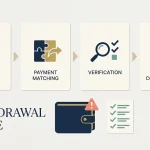
A casino that lets you begin without creating a conventional profile may still need to establish who is requesting a payout. The absence of a familiar username and password does not settle questions about identity or who owns the payment method used. Those questions can arise when you ask to withdraw, so access to funds may depend on answering them.
The point is the difference between the way you enter or use a service and the checks applied to a withdrawal. A streamlined sign-in or payment flow does not itself prove that a payout can be made without further confirmation. If the operator needs to resolve an identity or payment-ownership question, it may ask you to provide information before processing the withdrawal.
That can affect what happens after a win. You may see a balance in the game interface, but the balance is not the same as money already transferred to you. A withdrawal request can remain unresolved while the operator checks the relevant details. Do not assume that using the same device, payment route or contact details automatically answers those questions; the operator may still need to verify them.
Withdrawal Reality
A "no-account" label describes the access arrangement, not a guarantee that withdrawals are free of identity or ownership checks.
Before playing, look for the operator’s withdrawal and verification terms, including what information it may request and how to contact it if a check stalls. Make sure the details you provide are accurate and that you can access the payment method involved. If the terms are unclear about what happens when a check cannot be completed, treat that uncertainty as a practical risk rather than assuming the process will be waived.
This is the key limitation behind the phrase “casino without an account”: it describes an access arrangement, not a promise that withdrawals are free of identity or ownership checks. The same applies when comparing casinos without an account. The relevant question is not simply whether registration is required at the start, but whether you understand what may be required when funds are due to leave the service.
How to Assess a Newly Launched No-Account Casino
A recent launch date tells you when a service appeared, not what regulatory status it has. A new no-account casino may use a different sign-up or payment process, but that label does not create an exception to the rules for serving players in Great Britain. Remote operators offering gambling to consumers there need the relevant Gambling Commission licence.
Before using a newly launched site, establish which business operates it and whether that operator has the required licence for the service it is offering. A brand name, launch announcement or polished website is not proof of regulatory approval. Nor does an operator’s claim that it is “new” show that its terms are safer or more favourable. Those are separate questions and need separate evidence.
Anjouan casino licence: what it means in the UK
Keep the operator’s identity distinct from the site’s marketing name. A service can present itself under a brand that does not make clear, by itself, which business is responsible for providing the gambling. If you cannot connect the service to an identifiable operator and confirm its regulatory status, do not treat the site as cleared for use. The practical point is not that every new site is suspect; it is that novelty supplies no evidence either way.
The no-account format does not change the licensing requirement. A quick payment flow, limited registration steps or claims of reduced friction describe how the service is presented to you. They do not establish that the business is authorised to offer remote gambling in Great Britain. Assess the operator’s status before depositing or playing, rather than inferring it from the interface or the date the site appeared.
Treat regulatory status as a threshold check, not a complete endorsement of every feature. A licence addresses whether the operator is permitted to serve the market; it does not, on its own, tell you whether a particular offer suits you or how every term will work. Keep those decisions separate: first establish that the operator has the relevant licence, then assess the specific service and conditions you are considering.
No-Deposit Free Spins: Check the Terms, Not Just the Spin Count
A no-deposit free-spin offer lets you play nominated slots without first making a deposit. The number of spins is only one part of the offer: it does not tell you whether winnings can be withdrawn, which games qualify, or how long the promotion remains available.
Typical No-Deposit Range
A specialist review describes no-deposit offers as typically providing 10–30 spins on selected slots. Note that this is a general description from a review and not a guarantee of current casino offers.
A specialist review describes no-deposit offers as typically providing 10–30 spins on selected slots. Treat that range as a description from that review, not a promise about what any casino currently offers. Promotions can change, and an offer mentioned elsewhere should not be treated as active unless it appears in the casino’s official live promotion terms.
Before activating the spins, check the named slot and any restrictions on how the spins are issued or used. The terms should state when the promotion expires and what happens to any winnings. In particular, look for whether winnings are credited as cash or as bonus funds, and whether conditions must be met before they can be withdrawn. A large spin count does not resolve any of those points.
Also check that the offer is genuinely available to you and that its terms are displayed with the promotion. If the live terms do not confirm the offer, its spin count or its conditions, do not rely on an old review, a search result or a promotional banner as evidence that it is still valid.
Curaçao Casino Licence UK: What Players Should Know
This is a narrow type of promotion, not a deposit bonus in disguise: the defining feature is that a deposit is not required to receive the spins. Whether the resulting winnings have practical value depends on the conditions attached to them, not simply on how many spins are advertised.
Trustly and Paysafecard: Separate Payment Labels from Withdrawal Rules
Seeing Trustly or Paysafecard mentioned beside a no-account casino does not, by itself, tell you whether either method is available to you. A payment logo or label may describe a deposit route, a withdrawal route, or a method shown only under particular conditions. Without the operator’s current payment information and terms, you cannot infer which applies.
The distinction matters because depositing and withdrawing are separate stages. A method that lets you put money into a gambling account does not necessarily provide a route for money to come back out. That is true whether you are considering Trustly, Paysafecard or another payment option. Treat each method’s role as something to confirm, not something implied by its name or appearance on a page.
Online Casino No Registration UK: How Checks Work
For UKGC-licensed sites, withdrawals must be processed through an alternative method, such as a bank transfer, debit card or regulated e-wallet. This is the general withdrawal rule; it does not establish that Trustly or Paysafecard is accepted by a particular casino, or that either is available for both directions of payment. The operator’s stated withdrawal options are what determine the route you can use.
What to check for Trustly
If a casino refers to Trustly, look for the exact context in which it is offered. Is it listed among deposit methods, withdrawal methods, or both? Check the casino’s current cashier information and payment terms rather than treating a logo, a search snippet or an old description as confirmation. If the terms do not clearly identify the method’s role, contact the operator before depositing.
Also check whether the withdrawal instructions name a separate route. If they do, plan around that route rather than assuming the deposit can be reversed through Trustly. The payment label alone cannot tell you how the operator handles a withdrawal.
British casinos not on GamStop in 2026: key facts
What to check for Paysafecard
Apply the same distinction when Paysafecard is mentioned. Its appearance in a list does not confirm that a withdrawal can be paid back through it. Read the relevant terms and identify the withdrawal method the operator says it will use. If that information is unclear, ask before you fund the account.
A no-account label does not change this payment distinction. It describes how the service presents access, not a guarantee that every deposit method can also receive withdrawals. Keep the method used to pay in separate from the method the operator specifies for paying out.
For either option, check the information that applies to the specific casino and transaction. Do not rely on a general claim that a payment service “works” at no-account casinos: that wording leaves out whether it supports deposits, withdrawals, or only one of them. The practical question is not simply whether Trustly or Paysafecard is named, but what role the operator assigns it and which withdrawal route its terms provide.
What is the maximum wagering requirement in Great Britain?
For bonus funds, the maximum is 10 times the bonus amount for incentives offered in Great Britain.
Can you withdraw to your phone bill when paying by mobile?
No. Pay-by-mobile is for deposits only; withdrawals must use another method, such as a bank transfer, debit card or regulated e-wallet.
Is LuckyPays licensed by the UK Gambling Commission?
The UK Gambling Commission’s public register dated 26 September 2026 does not list LuckyPays or luckypays.io. Operators serving consumers in Great Britain need the relevant Commission licence.
Which payment types are listed?
Mobile deposits via Boku or Payforit are listed. Withdrawal methods include bank transfer, debit card and regulated e-wallet.
Casino Sites

£1 Minimum Deposit Casinos in the UK: How They Work
A £1 cashier minimum may depend on the payment method, and does not automatically qualify...

£10 Minimum Deposit Casinos in the UK: How It Works
A cashier minimum sets the smallest accepted payment; it is not a guide to how...

£2 Minimum Deposit Casinos in the UK: What to Check
A low account deposit may not meet the separate rules for a payment method, promotion,...

£20 Minimum Deposit Casinos in the UK: How They Work
A cashier minimum applies to the funding transaction, while game stakes follow the rules and...

£3 Minimum Deposit Casinos in the UK: What to Check
A cashier threshold can vary by payment method and does not determine bonus eligibility, withdrawal...

£4 Minimum Deposit Casinos in the UK: What to Check
A cashier minimum is only an entry condition; payment methods, account rules and promotion terms...

£5 Minimum Deposit Casinos in the UK: How They Work
See how the cashier minimum works and how it relates to payment methods, bonuses and...

Anjouan casino licence: what it means in the UK
Anjouan licensing sets the operator’s regulatory basis, but does not itself authorise gambling services for...

Best casino app UK: how mobile play works
See how casino apps differ from browser play, and what to check about payments, bonus...

Foreign Casinos for UK Players: Licensing and Risks
The guide explains how foreign casinos relate to UK rules and what licensing, payment terms...

International Casinos for UK Players: Key Checks
An overview of licensing, player protections, bonuses, payments and the legal considerations that distinguish international...

Pay by Phone Credit at UK Mobile Casinos
Phone-credit deposits use a mobile account to fund a casino balance, while payment availability, fees...

Offshore casino sites for UK players: rules and risks
This guide explains licensing limits, listing caveats, payment and withdrawal risks, and how offshore sites...

Offshore casinos for UK players: rules and risks
Explains how offshore operators sit outside UKGC regulation and what that can mean for access,...

British casinos not on GamStop in 2026: key facts
GamStop applies to UKGC-licensed operators, while offshore licensing and site terms require separate checks. How...

Casino No ID Verification UK: How Checks Work
A lack of document requests at sign-up does not mean an account is verified or...

Casino Sites Not Registered with GamStop in the UK
GamStop applies to UKGC-licensed operators; overseas licensing, voluntary safeguards and casino terms can differ. What...

Casinos Without a UK Licence: Rules and Risks
An overseas operator’s location does not determine whether it needs a UKGC licence to offer...

Casinos That Bypass GamStop: How It Works
GamStop applies to participating UKGC-licensed operators; a site outside the service may operate under a...

Curaçao Casino Licence UK: What Players Should Know
A Curaçao licence identifies a licensing jurisdiction, but does not establish that a casino is...

Gibraltar Casino Licence in the UK: What to Check
A Gibraltar connection or favourable ranking does not establish which authority oversees a casino or...

Merkur Casino Online UK: Games, Demos and Checks
A practical guide to spin mechanics, demo sessions, site checks, bonus terms and the limits...

Trustworthy Online Casinos in the UK: What to Check
A practical framework for checking licensing, player safeguards, verification, games and payments before opening an...

No-ID Verification Withdrawals at UK Casinos
The guide distinguishes document-free sign-up claims from later checks, and explains how verification can shape...

No Minimum Deposit Casinos in the UK: What £1 Means
A low cashier minimum does not guarantee a bonus or determine how much you can...

Non-Gamban Casinos in the UK: What the Label Means
A site's accessibility on one device does not verify its licence, safety or general relationship...

Non-GamStop Curacao Casino Sites: UK Guide
A practical framework for checking licensing claims, payment methods and self-exclusion coverage without treating them...

Non-GamStop European Casinos: UK Exclusion Explained
GamStop covers participating online gambling businesses, while individual casino closures and sites outside the scheme...

Non-UK Licence Casinos: What the Licence Means
Licences from Malta and other jurisdictions apply under their own regulators and are not the...

Non-UK-Registered Casinos: Regulation Explained
A guide to UKGC oversight, offshore licensing, self-exclusion, payments and checks that help assess an...

Non-UK-Regulated Casinos: UK Rules and Risks
UKGC status depends on the operator and the market it serves, not merely on whether...

Non-UKGC-Licensed Casinos: Rules and Risks
A guide to licensing, player protections, self-exclusion and payments when a casino operates outside UKGC...

Malta-Licensed Online Casinos and UK Gambling Rules
A Malta licence covers an operator’s Maltese authorisation, while serving customers in Great Britain requires...

Online Casino No Registration UK: How Checks Work
The label may describe a shorter sign-up, but it does not remove the requirement to...

Online Casinos Without Sister Sites in the UK
Sister-site connections can involve shared ownership or technology, and do not necessarily mean that brands...

Online Slots Not on GamStop: What the Label Means
GamStop applies to participating gambling establishments, not individual games, so labels and site claims need...

Safe Online Casino UK: Licence, Checks and Risks
A UKGC licence establishes a legal baseline, while identity checks, payments, game rules and safer-play...

UK Online Casino Payouts: RTP and House Edge
RTP, house edge and game-specific figures describe long-run returns, not a guaranteed result from any...

Trusted Casinos Not on GamStop UK: What to Check
Understand the limits of trust claims and examine licensing, player protections, bonus conditions and withdrawal...

Trusted UK casinos: checking licences and safeguards
A practical look at UK licensing, public-register checks, enforcement history and the protections available across...

USA Casinos for UK Players: What to Check
A US connection or an accessible website does not establish that an operator is authorised...

VPN-Friendly Casinos in the UK: Rules and Access
A VPN-friendly label describes an operator’s approach to VPN connections, not a guarantee of access...