Gibraltar Casino Licence in the UK: What to Check
 Available in GB

A Gibraltar connection or favourable ranking does not establish which authority oversees a casino or whether it can serve customers in Great Britain.
Table of Contents
- What “Best Gibraltar Casinos” Can—and Cannot—Tell You
- How to Read a Gibraltar Casino Site’s Regulatory Position
- “Top” Casino Claims: Check the Licence, Not the Label
- Real-Money Play: Payments, Withdrawals and Their Limits
- What “Gibraltar Online Casino” Means for a UK Player
- A Casino Licence Is Not the Same as UKGC Authorisation
- How Offshore Casino Terms Can Affect Bonuses and Cashouts
- Using an Online Casino in Gibraltar’s Licensing Context
- Before Trying a New Casino: Check What Happens if Something Goes Wrong
- Why Casino Operators Choose Offshore Bases—and What That Means for You
What “Best Gibraltar Casinos” Can—and Cannot—Tell You
“Best” is a judgement, not a regulatory category. A page describing the best online casinos in Gibraltar may be expressing an editorial preference, promoting selected sites, or using a label whose criteria are not clear. The word alone does not tell you who operates a casino, which authority oversees it, or whether it is authorised to serve customers in Great Britain.
A useful first step is to separate the claim from the facts that could support it. If a site calls itself a leading Gibraltar casino, ask what “leading” refers to. It might mean a particular range of games, a design feature or an editorial rating. Unless the page explains how its judgement was reached, you cannot tell whether those criteria were applied consistently. A favourable label should not be treated as proof of regulatory oversight.
The same distinction applies to a review page naming the best Gibraltar online casinos. A list can compare features, but its order does not establish that one site is safer or more suitable than another. If the page does not explain its evaluation method, a ranking tells you only how that page has arranged the operators. It does not identify the regulator responsible for each casino.
If you are considering a casino in the context of Gibraltar licensing and the UK market in 2026, check the licensing details independently. This list gives you one confirmed practical detail for each operator: its stated payout speed.
1. Amunbet
Payout speed: 1-3 business days Amunbet lists a payout speed of 1–3 business days, giving you a stated timeframe to consider when reviewing its payment details.
2. NightWin
Payout speed: 1-3 business days NightWin lists a payout speed of 1–3 business days. You can use this as a reference when checking its payment terms.
3. SlotoSport
Payout speed: 1-3 business days SlotoSport lists a payout speed of 1–3 business days, a useful detail for you to factor into your review.
4. Britsino
Payout speed: 1-3 business days Britsino lists a payout speed of 1–3 business days. Check its payment terms to understand how this stated timeframe applies.
5. EvoSpin
Payout speed: 1-3 business days EvoSpin lists a payout speed of 1–3 business days, providing you with a stated timeframe for payouts.
6. x3bet
Payout speed: 1-3 business days x3bet lists a payout speed of 1–3 business days. You can consider this detail alongside the operator’s payment terms.
7. SpinFormula
Payout speed: 1-3 business days SpinFormula lists a payout speed of 1–3 business days, giving you a specific payment detail to check.
8. WinBeast
Payout speed: 1-3 business days WinBeast lists a payout speed of 1–3 business days. Review its terms for any further information about payouts.
9. Dieselwin
Payout speed: 1-3 business days Dieselwin lists a payout speed of 1–3 business days, a stated timeframe you can keep in mind when assessing its payment details.
10. Jetsetspins
Payout speed: 1-3 business days Jetsetspins lists a payout speed of 1–3 business days. You can check its payment terms for additional details.
Separate praise from oversight
A casino’s relationship with Gibraltar can take different forms. It may be based there, hold a licence issued in Gibraltar, or simply be described as Gibraltar-related in promotional material. Those statements are not interchangeable. The relevant regulatory question is whether an authority actually oversees the gambling operation, rather than whether the site uses a location in its name or description.
Non-UK-regulated casinos operate without oversight from the UK Gambling Commission. Such sites may be licensed in jurisdictions including Gibraltar, Malta, Curacao or Anjouan. The word “licensed” therefore needs context: it should identify the licensing authority and the operation covered, rather than stand alone as a general assurance.
A reference to Gibraltar is not, by itself, evidence that a site has a Gibraltar licence. Nor does a licence from Gibraltar mean that the UK Gambling Commission oversees the site. These are separate claims, and promotional wording can blur them. A site may use a Gibraltar connection to shape its presentation while leaving the actual licensing details elsewhere, such as in its terms or legal information.
For a UK reader, this distinction matters because a favourable review and a regulator’s oversight answer different questions. A “best casino site in Gibraltar” label is an opinion or marketing description. The regulator’s identity is a verifiable detail about the site’s stated regulatory position. Neither a high rating nor polished presentation substitutes for that detail.
Merkur Casino Online UK: Games, Demos and Checks
Treat “best” as a starting point
When you encounter claims about the best online casinos in Gibraltar, read the wording precisely. Does the page say the operator is based in Gibraltar, that it holds a Gibraltar licence, or only that it is a recommended choice for people interested in Gibraltar? Those statements carry different meanings. If the page does not say which authority issued a licence, the broad word “licensed” leaves an important point unresolved.
The same care applies to “best casino sites” and “best online slots” descriptions. A casino site and the games available within it are different things: a claim about the quality or selection of games does not establish who regulates the operator. Keep each claim attached to the subject it actually describes.
This approach does not require you to accept or reject a site because it appears in a ranking. It means reading the ranking as a presentation, then treating regulatory oversight as a separate matter that needs direct, specific information. The label may help explain how a page wants you to view a casino; it cannot, on its own, establish who supervises it.
How to Read a Gibraltar Casino Site’s Regulatory Position
A casino website can have a connection with Gibraltar without that fact answering whether it may serve customers in Great Britain. Three questions need to be kept separate: where the business is based, which jurisdiction has issued its gambling licence, and whether it holds the authorisation required for the market it serves. Treating these as one question can make a site’s regulatory position appear clearer than it is.
Company Location
A business connection indicating where an operator is established; it is not proof of market authorisation for Great Britain.
Licensing Jurisdiction
The authority that issued the gambling licence, which identifies a regulatory relationship but not necessarily UKGC authorisation.
Market Authorisation
The decisive requirement for Great Britain, which requires a licence from the UK Gambling Commission regardless of company location.
A company’s location describes a business connection. It may indicate where an operator is established, but it does not by itself identify every regulator whose rules apply to its gambling services. Nor does a Gibraltar address, or a reference to Gibraltar in a company description, establish that the operator has permission to offer gambling to people in Great Britain. Location is context, not proof of market authorisation.
The licensing jurisdiction is a separate matter. A gambling licence is issued under the rules of the jurisdiction responsible for it. A reference to a Gibraltar licence, if accurate and applicable to the operator and service in question, identifies a regulatory relationship with that jurisdiction. It does not automatically answer whether the operator is authorised under British rules. The licence’s origin and the market in which the service is offered are distinct parts of the picture.
For Great Britain, the decisive regulatory question is whether the operator holds the relevant UK Gambling Commission licence. Operators serving customers in Great Britain must hold that licence regardless of where their business is based. The requirement therefore follows the market served, rather than being displaced by an overseas address or a licence issued elsewhere.
This distinction matters when you encounter a Gibraltar-linked casino site. Its location may be Gibraltar, its licence may come from a jurisdiction named on the site, and its intended customers may be in several countries. Those details do not collapse into a single status. A foreign licence cannot be read as a substitute for UKGC authorisation to serve Great Britain; equally, a company’s location alone does not establish which licence covers its gambling operations.
Casinos Without a UK Licence: Rules and Risks
The Gambling Act 2005 is directed at operators supplying gambling services into the UK market, rather than at individual players. That allocation of responsibility helps clarify what the regulatory question is about: the operator’s authority to provide the service in the relevant market. It does not turn a site’s marketing description, corporate address or licence badge into evidence of that authority.
There is also a geographical distinction in the wording. Great Britain means England, Scotland and Wales; the UK includes Northern Ireland as well. The requirement described here concerns operators serving customers in Great Britain. Do not assume that a statement about a Gibraltar connection, or about the UK market generally, resolves the rules for every part of the UK. The location of the customer and the market the operator serves remain relevant to the question being asked.
When reading a site’s regulatory information, separate the claims rather than treating them as interchangeable. A page may identify a company address, name a licensing jurisdiction, or state that the operator accepts customers from a particular market. Each statement answers a different question. The key UK-facing point is whether the operator has the UKGC licence required to serve Great Britain, not simply whether it can point to a Gibraltar connection or an overseas licence.
This is a way to interpret the regulatory structure, not a recommendation to use any particular casino. A Gibraltar connection can be relevant background, but it cannot establish British authorisation on its own. Once location, licensing jurisdiction and permission to serve Great Britain are kept distinct, the site’s position is easier to describe accurately: where the operator is based, which regulator licenses it, and whether it holds the required authorisation for the market in question.
Do
- Separate the company address from the licensing jurisdiction
- Verify the operator’s legal entity against public records
- Check for a valid UKGC licence for Great Britain
Don’t
- Assume a Gibraltar address proves market authorisation
- Treat a foreign licence as a substitute for UKGC status
- Mistake a marketing label for regulatory evidence
“Top” Casino Claims: Check the Licence, Not the Label
A casino calling itself one of the top Gibraltar online casinos is making a promotional claim, not establishing a regulatory fact. “Top” might refer to design, game selection or an editorial judgement; without stated criteria, it tells you little about how the site is supervised. Even a confident statement that a casino is licensed needs checking against information that identifies the licence and the entity holding it.
Start by separating the claim from its evidence. A site may display a regulator’s name or logo, but that alone does not show which company operates the casino, what activity the licence covers, or whether the authorisation applies to the site you are using. Look for the legal company name and licence details in the operator’s own terms or regulatory information. Then compare those details with the regulator’s public records, where available. If the names do not match, the licence cannot safely be treated as proof that the site itself is covered.
The wording also matters. “Based in Gibraltar”, “Gibraltar casino” and “licensed in Gibraltar” are not interchangeable descriptions. A location claim does not prove that a regulator has authorised the operator; a licence claim does not, by itself, explain which services or customers it covers. Treat broad phrases as prompts to verify, not as substitutes for a precise regulatory statement.
International Casinos for UK Players: Key Checks
Be cautious when a page uses badges, awards or rankings to reinforce a licensing claim. Those signals may describe reputation or a publisher’s assessment, but they do not independently confirm regulatory status. A list of top casino sites can be useful only if it explains how sites were assessed and provides evidence for material claims. If the page gives no method, or repeats operators’ own wording without checking it, its ranking is not proof.
This distinction is especially important when a page is built around phrases such as “top online casinos in Gibraltar”. Search-style wording can make a list look like a definitive guide, but the heading does not establish that each entry has been examined. Check whether the page names the operator’s legal entity, identifies the relevant authority and links its conclusion to verifiable records. If those details are absent, the claim remains unsubstantiated, however polished the presentation.
A missing or unclear licence statement should not be filled in by inference. A site may operate from one place, use a company registered elsewhere, and describe itself with a third jurisdiction’s name. None of those details alone confirms the regulatory position. If the operator does not make its legal identity and authorisation clear, you have less evidence to assess its claim—not a reason to assume the most favourable interpretation.
The legal position for an individual player is distinct from a site’s promotional language. UK law does not expressly forbid British citizens from using gambling services licensed in another country, and playing on an unlicensed site is not itself a criminal offence for the player. That does not turn a “top” label into verification or establish that the operator is properly authorised. Judge the claim by its evidence, not by its confidence.
Attention A "top" label or promotional badge is a marketing claim and does not independently confirm that a casino is properly authorised or regulated.
Real-Money Play: Payments, Withdrawals and Their Limits
At a real-money casino associated with Gibraltar, the deposit route is only one part of the transaction. You also need to know how a withdrawal is requested, which method the operator will use to send it, and whether limits or checks can affect the amount or timing. A payment logo on a cashier page tells you that a method may be available; it does not establish that the same method will be available for withdrawals.
Non-UK-regulated casinos may accept card payments, e-wallets, bank transfers or cryptocurrency, sometimes through payment processors other than the ones commonly used by UK-regulated sites. The available options can depend on the operator and the processor. If you deposit using one method, the operator may require you to withdraw by another, so check the cashier rules before paying in. A supported deposit method is not a promise that it can also be used to cash out.
Withdrawal times are not described consistently. Some accounts give a range from 24 hours to five business days, depending on the payment method; other descriptions say a payout can take three or four weeks. Those accounts disagree, so neither range should be treated as a guaranteed timetable for a particular casino. Processing may involve separate stages: the operator reviews the request, then the payment provider handles the transfer. The time shown for one stage may not cover the whole process.
Limits can also change how quickly you receive a large balance. A specialist review has reported that some operators set daily, weekly or monthly withdrawal caps, which can split a larger payout into instalments. Treat this as a condition to verify for the specific site, not a standard feature of every Gibraltar-linked casino. Look for the cap that applies to your account and payment method, and check whether a pending withdrawal can be cancelled or changed.
USA Casinos for UK Players: What to Check
Before depositing, read the cashier and withdrawal rules together. Confirm whether the operator requires withdrawals to return to the original payment source, whether fees or conversion steps apply, and what account details must match. For cryptocurrency, check which asset and network the cashier supports; a transfer to an incompatible address or network may not be recoverable. Do not assume that a payment option shown at deposit will remain available when you request your money.
The practical comparison between real-money slots at a Gibraltar-connected site and a UK-facing casino is therefore not just which deposit buttons appear. It is whether the withdrawal route, processing stages and any payout cap are clear before you commit funds. If those terms are unclear, the advertised payment choice does not tell you enough to predict when, or in what instalments, you could receive a withdrawal.
What “Gibraltar Online Casino” Means for a UK Player
A casino described as being in Gibraltar may have a connection to that jurisdiction, but the description alone does not establish whether it is authorised to offer gambling to customers in Great Britain. The operator’s base and the market it serves are separate questions. A Gibraltar connection is not a substitute for the authorisation required for Great Britain.
For operators, the rule is tied to the customer market, not the company’s address: a business supplying gambling services to customers in Great Britain needs a licence from the UK Gambling Commission. That requirement applies whether the operator is based in Gibraltar, elsewhere overseas or in the UK. A site operating without UKGC oversight is a non-UK-regulated casino, even if it holds permission from another jurisdiction.
For operators supplying gambling services to customers in Great Britain, a licence from the UK Gambling Commission is required regardless of whether the business is based in Gibraltar or elsewhere overseas.
This distinction matters because “Gibraltar casino” can describe location or licensing context, while a UK player may read it as a statement about permission to serve them. Those meanings are not interchangeable. A Gibraltar online gambling licence, where held, does not by itself show that the operator also holds the UKGC authorisation required for Great Britain. Nor does a site’s availability to a British visitor prove that it is authorised to target the British market.
The Gambling Act 2005 governs gambling in England, Wales and Scotland, and its market-facing requirements apply to operators providing services in Great Britain. Northern Ireland has a separate legal context. The central point for a player in Great Britain is that legal online casino gambling is provided by sites operating under the relevant UKGC licence. A licence issued elsewhere does not place the operator within the UKGC system.
That does not mean that a British citizen is expressly barred by UK law from using a gambling service licensed abroad. The law’s licensing obligation is directed at the operator supplying the service, rather than imposing a criminal penalty on an individual for playing. This distinction should not be mistaken for UK authorisation: a player using a site without a UKGC licence is not using a UKGC-regulated casino.
If you encounter a site presenting itself as a Gibraltar online casino, treat that wording as a description, not proof of its status in Great Britain. The relevant question is whether the operator has the UKGC licence required to serve that market. A foreign licence and a UKGC licence answer different regulatory questions; the former does not establish the latter.
Online Casino No Registration UK: How Checks Work
A Casino Licence Is Not the Same as UKGC Authorisation
A casino can hold a licence from one jurisdiction and still lack the authorisation required to serve customers in Great Britain. These are separate regulatory questions: which authority issued the licence, and whether the operator holds the licence required for the market it serves.
Gibraltar is among the jurisdictions that license online casinos. A Gibraltar casino licence therefore identifies a regulatory jurisdiction; it does not, by itself, establish that the operator is authorised by the UK Gambling Commission. The same distinction applies to online casinos licensed in Malta, Curacao or Anjouan: a licence from another jurisdiction is not a substitute for a UKGC licence.
The rule for Great Britain is based on the service being offered, not the operator’s address. An operator serving customers in Great Britain must hold a UK Gambling Commission licence regardless of whether its business is based in Gibraltar or elsewhere. Moving the company’s headquarters, or holding a licence abroad, does not remove that requirement.
This makes the phrase “Gibraltar-licensed” incomplete as a description of a site’s UK regulatory position. It tells you something about the claimed licensing jurisdiction, but not whether the operator holds the separate authorisation needed to serve Great Britain. A site may have a Gibraltar licence and a UKGC licence; the first does not prove the second. Nor does a Gibraltar connection alone show that the site is authorised for the British market.
Regulatory Status
A Gibraltar licence and permission to serve Great Britain are distinct facts and are not interchangeable.
The distinction matters because licences are not interchangeable credentials. Each regulator’s authority applies within its own regulatory framework. A Gibraltar licence cannot be read as though it were issued by the UK Gambling Commission, and it does not confer UKGC status. Conversely, the operator’s location does not determine whether it needs UKGC authorisation: the requirement applies to operators serving Great Britain even when they are based outside it.
When a site describes itself as a Gibraltar online casino, treat that as a statement about its connection to Gibraltar, not as proof of UKGC authorisation. The relevant question is whether the operator has the UK Gambling Commission licence required to serve customers in Great Britain. A licence from another jurisdiction and UKGC authorisation are distinct facts; establishing one does not establish the other.
This is a distinction about regulatory status, not a ranking of licence quality. The presence of a foreign licence cannot be used to infer that the operator meets the UK requirement, while the operator’s base cannot be used to infer that the requirement does not apply. For a British customer, the key point is that a Gibraltar licence and permission to serve Great Britain are not the same thing.
How Offshore Casino Terms Can Affect Bonuses and Cashouts
A bonus has a practical value only after you account for the conditions attached to it. The headline amount does not tell you how much play is required, which funds count towards that requirement, or when the offer expires. These details determine whether you can use the bonus on your own terms or whether you must meet conditions before withdrawing associated winnings.
Safe Online Casino UK: Licence, Checks and Risks
A specialist review has reported welcome offers at non-UK-regulated casinos with wagering requirements of 35x or more. Treat that as a reported offer, not a standard applying to every casino: terms vary by operator and promotion. The multiplier also needs a defined base. A 40x requirement, as described in a specialist review, could apply to the bonus alone, the deposit and bonus together, or the bonus and free spins together. Those calculations produce different totals, so check the offer’s wording rather than inferring the requirement from the multiplier.
For instance, if wagering applies to the deposit as well as the bonus, the amount that must be played can be much larger than if only the bonus counts. The key clause is the one identifying the balance or winnings used in the calculation. Also check whether a game contributes fully or only partly towards wagering; the terms may specify which games qualify. If that detail is unclear, the offer’s advertised value is difficult to assess.
Expiry rules add another constraint. A specialist review has described free-spin packages that expire within 24–72 hours. That is not a universal deadline; the relevant period is the one stated for the specific promotion. Check when the clock starts, whether unused spins lapse, and whether winnings from them have a separate wagering condition or withdrawal cap. An offer that expires before you can use it has no practical value to you, regardless of its headline description.
Bonus Verification
Step 1: Check the Wagering Base
Identify if the multiplier applies to the bonus alone or to the deposit and bonus combined.
Step 2: Review Game Contributions
Determine which games contribute fully or partly towards the wagering requirements.
Step 3: Verify Expiry Deadlines
Check the exact timeframe (e.g., 24–72 hours) before the bonus or free spins lapse.
Step 4: Confirm Withdrawal Conditions
Read the terms for any winnings caps or specific verification documents required for cashouts.
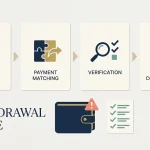
Verification can affect access to a cashout even after play is complete. Some specialist reviews report that certain non-UK-regulated operators may ask for notarised documents or a video call before processing a withdrawal. These are reported examples, not steps that every operator requires. Read the account and withdrawal terms for the documents that may be requested, when checks can take place, and how the operator handles a request that needs further evidence. Keep copies of submitted information and records of relevant account messages.
Before accepting an offer, read the bonus rules alongside the general account terms. Look for the wagering base, eligible games, expiry trigger, any cap on winnings, and verification conditions. A change to any one of these can alter what you can withdraw or when you can access it. If the wording leaves a material condition uncertain, do not assume the more favourable interpretation will apply; ask the operator to clarify it in writing before opting in.
Using an Online Casino in Gibraltar’s Licensing Context
A Gibraltar connection does not tell you what safeguards apply when you use a casino. For a player in Great Britain, the practical distinction is whether the operator holds a UK Gambling Commission licence. A UKGC-regulated casino must follow the Commission’s requirements for serving customers in Great Britain. A non-UK-regulated casino operates outside that system, even if it has a connection to Gibraltar.
That difference affects what support and protections are available to you. At a UKGC-regulated casino, mandatory responsible-gambling tools form part of the regulatory framework. At a non-UK-regulated casino, you do not have access to those UK-mandated tools. Do not assume that a deposit limit or self-exclusion option will be available, or that a tool offered by the operator works in the same way as a UK scheme.
Trustworthy Online Casinos in the UK: What to Check
The distinction also affects where you can turn if a problem involves your treatment as a customer. If you use a non-UK-regulated casino, you cannot take the matter to the UK’s Financial Ombudsman Service. The operator may have its own procedures, but those do not give you access to that UK service. In practical terms, resolving a dispute may depend more heavily on the operator’s own processes.
Data handling is another area of exposure. Non-UK-regulated casinos may operate under less stringent data-protection rules than UKGC-licensed operators. That does not establish how a particular site will handle your information; it means you should not assume that UKGC requirements apply just because the site serves you or refers to Gibraltar.
Before creating an account, identify which protections you would rely on if you needed to control your gambling, protect personal information or raise a concern. Read the operator’s policies, but distinguish its promises from UK regulatory requirements. A policy displayed on a site is not the same as oversight by the UKGC, and the Gibraltar connection alone does not supply the missing UK protections.
If you decide to use a non-UK-regulated casino, you are taking on a different level of exposure: UK-mandated responsible-gambling tools and access to the Financial Ombudsman Service are not part of that arrangement. Consider whether you can manage without those protections before depositing or sharing personal details.
Before Trying a New Casino: Check What Happens if Something Goes Wrong
A new casino’s launch date tells you when its site appeared, not how player funds or complaints are handled. The same applies to a Gibraltar connection: the location or branding alone cannot tell you what process applies if a withdrawal is disputed or the operator stops trading. Check the named licensing jurisdiction and the complaint route before depositing, rather than treating “new” as evidence of reliable oversight.
Financial Risk
In certain jurisdictions like Anjouan, player funds may not be segregated from operator funds, meaning you could rank as an unsecured creditor if the business fails.
Anjouan provides a specific example of why those details matter. Under its framework, the licensing authority does not take up player complaints, mediate between a customer and an operator, or decide who is right in a dispute. Anjouan-licensed casinos also do not offer an independent dispute service equivalent to the alternative dispute resolution arrangements associated with UKGC-regulated operators. If the operator rejects your complaint, there may therefore be no comparable external route for asking an independent body to review the decision.
Player funds create a separate risk. Anjouan-licensed casinos are not required to guarantee that customer money is kept apart from the operator’s own funds. If the business fails, you may rank as an unsecured creditor: you would have a claim against the failed company, but the money is not guaranteed to be held separately for you. A balance shown in an account is not, by itself, proof that the same amount is protected or readily recoverable.
Before using a site, identify the operator’s legal name, the jurisdiction stated in its terms, and the route it gives for complaints. Read the process closely: a contact form handled by the casino is not the same thing as independent review. Also look for what the terms say about funds if the operator closes or becomes insolvent. If those details are unclear, you cannot reliably predict what options you would have after a dispute or failure.
These points describe the Anjouan framework; they should not be assumed to describe Gibraltar’s rules. A casino promoted as a new Gibraltar online casino may have a different regulatory position, so establish which authority actually licenses the operator rather than transferring assumptions from one jurisdiction to another. The practical test is not how recently the site opened, but whether you can identify the applicable oversight and understand the limits of the recourse it offers.
Online Casinos Without Sister Sites in the UK
Why Casino Operators Choose Offshore Bases—and What That Means for You
An operator’s base is the place from which it is established or managed. It does not, by itself, decide which customers the operator may serve or which rules apply to those services. If a casino offers real-money gambling to customers in Great Britain, it must hold the relevant UK Gambling Commission licence, regardless of where the business is based.
That distinction matters when you see a reference to Gibraltar. A Gibraltar connection may describe an operator’s location or a licence issued there; it does not alone establish that the operator is authorised to serve customers in Great Britain. The same principle applies to other jurisdictions. The question is not simply where an online casino is based, but whether it has the authorisation required for the market it serves.
Anjouan illustrates why licences from different jurisdictions should not be treated as interchangeable. An Anjouan casino licence does not permit the operator to serve the United Kingdom or other restricted markets. Its framework also does not require casinos to use GAMSTOP, provide an independent dispute-resolution route comparable to UKGC-approved services, test random number generators, undergo audits, or keep player funds segregated. Those are specific features of the Anjouan framework; they should not be assumed to describe Gibraltar’s licensing rules.
A licence can therefore establish a relationship with one regulator without granting permission to operate in every country. Nor does an operator’s chosen base remove the requirements attached to serving customers in Great Britain. A site may be based outside Britain and still need UKGC authorisation for that market.
If you are assessing a casino with a foreign base, separate three points: where the operator is based, which authority issued its licence, and whether it is authorised to serve customers where you live. Check the rules that apply locally and understand the implications before using an offshore gambling service. A location label alone cannot answer those questions.
Why do some online casinos choose an Anjouan licence over a UKGC or Malta licence?
Anjouan-licensed casinos may offer more lenient deposit and withdrawal policies, with fewer restrictions and potentially faster payouts. However, an Anjouan licence does not authorise a casino to operate in the United Kingdom, and it does not provide protections comparable to UKGC oversight.
What payment methods work best at non-UK-regulated casino sites?
These sites may accept credit cards, e-wallets, bank transfers and cryptocurrencies, sometimes through alternative processors. Some also allow payments through a mobile phone bill or prepaid balance.
Is it legal for a UK player to gamble at an Anjouan-licensed casino?
UK law does not explicitly prohibit you from using gambling services licensed overseas, and players do not commit a criminal offence by gambling on an unlicensed site. However, an Anjouan licence does not authorise the casino to operate in the UK; operators serving Great Britain need a UK Gambling Commission licence.
What are non-UK-regulated casinos?
They are online gambling sites that operate without oversight from the UK Gambling Commission. They may hold licences from overseas jurisdictions, but those licences do not replace the UKGC licence required to serve customers in Great Britain.
What is the biggest risk of playing at a non-UK-regulated casino?
You may have fewer protections if something goes wrong: Anjouan-licensed casinos do not provide an independent dispute-resolution route comparable to UKGC-approved services, and the Anjouan authority does not adjudicate player complaints. Player funds are not guaranteed to be segregated, so you may be an unsecured creditor if the operator fails.
Casino Sites

£1 Minimum Deposit Casinos in the UK: How They Work
A £1 cashier minimum may depend on the payment method, and does not automatically qualify...

£10 Minimum Deposit Casinos in the UK: How It Works
A cashier minimum sets the smallest accepted payment; it is not a guide to how...

£2 Minimum Deposit Casinos in the UK: What to Check
A low account deposit may not meet the separate rules for a payment method, promotion,...

£20 Minimum Deposit Casinos in the UK: How They Work
A cashier minimum applies to the funding transaction, while game stakes follow the rules and...

£3 Minimum Deposit Casinos in the UK: What to Check
A cashier threshold can vary by payment method and does not determine bonus eligibility, withdrawal...

£4 Minimum Deposit Casinos in the UK: What to Check
A cashier minimum is only an entry condition; payment methods, account rules and promotion terms...

£5 Minimum Deposit Casinos in the UK: How They Work
See how the cashier minimum works and how it relates to payment methods, bonuses and...

Anjouan casino licence: what it means in the UK
Anjouan licensing sets the operator’s regulatory basis, but does not itself authorise gambling services for...

Best casino app UK: how mobile play works
See how casino apps differ from browser play, and what to check about payments, bonus...

Foreign Casinos for UK Players: Licensing and Risks
The guide explains how foreign casinos relate to UK rules and what licensing, payment terms...

International Casinos for UK Players: Key Checks
An overview of licensing, player protections, bonuses, payments and the legal considerations that distinguish international...

Pay by Phone Credit at UK Mobile Casinos
Phone-credit deposits use a mobile account to fund a casino balance, while payment availability, fees...

Offshore casino sites for UK players: rules and risks
This guide explains licensing limits, listing caveats, payment and withdrawal risks, and how offshore sites...

Offshore casinos for UK players: rules and risks
Explains how offshore operators sit outside UKGC regulation and what that can mean for access,...

British casinos not on GamStop in 2026: key facts
GamStop applies to UKGC-licensed operators, while offshore licensing and site terms require separate checks. How...

Casino No ID Verification UK: How Checks Work
A lack of document requests at sign-up does not mean an account is verified or...

Casino Sites Not Registered with GamStop in the UK
GamStop applies to UKGC-licensed operators; overseas licensing, voluntary safeguards and casino terms can differ. What...

Casinos Without a UK Licence: Rules and Risks
An overseas operator’s location does not determine whether it needs a UKGC licence to offer...

Casinos That Bypass GamStop: How It Works
GamStop applies to participating UKGC-licensed operators; a site outside the service may operate under a...

Curaçao Casino Licence UK: What Players Should Know
A Curaçao licence identifies a licensing jurisdiction, but does not establish that a casino is...

Merkur Casino Online UK: Games, Demos and Checks
A practical guide to spin mechanics, demo sessions, site checks, bonus terms and the limits...

Trustworthy Online Casinos in the UK: What to Check
A practical framework for checking licensing, player safeguards, verification, games and payments before opening an...

No Account Casinos in the UK: How They Work
The label describes a sign-up or payment journey, but does not explain how a casino...

No-ID Verification Withdrawals at UK Casinos
The guide distinguishes document-free sign-up claims from later checks, and explains how verification can shape...

No Minimum Deposit Casinos in the UK: What £1 Means
A low cashier minimum does not guarantee a bonus or determine how much you can...

Non-Gamban Casinos in the UK: What the Label Means
A site's accessibility on one device does not verify its licence, safety or general relationship...

Non-GamStop Curacao Casino Sites: UK Guide
A practical framework for checking licensing claims, payment methods and self-exclusion coverage without treating them...

Non-GamStop European Casinos: UK Exclusion Explained
GamStop covers participating online gambling businesses, while individual casino closures and sites outside the scheme...

Non-UK Licence Casinos: What the Licence Means
Licences from Malta and other jurisdictions apply under their own regulators and are not the...

Non-UK-Registered Casinos: Regulation Explained
A guide to UKGC oversight, offshore licensing, self-exclusion, payments and checks that help assess an...

Non-UK-Regulated Casinos: UK Rules and Risks
UKGC status depends on the operator and the market it serves, not merely on whether...

Non-UKGC-Licensed Casinos: Rules and Risks
A guide to licensing, player protections, self-exclusion and payments when a casino operates outside UKGC...

Malta-Licensed Online Casinos and UK Gambling Rules
A Malta licence covers an operator’s Maltese authorisation, while serving customers in Great Britain requires...

Online Casino No Registration UK: How Checks Work
The label may describe a shorter sign-up, but it does not remove the requirement to...

Online Casinos Without Sister Sites in the UK
Sister-site connections can involve shared ownership or technology, and do not necessarily mean that brands...

Online Slots Not on GamStop: What the Label Means
GamStop applies to participating gambling establishments, not individual games, so labels and site claims need...

Safe Online Casino UK: Licence, Checks and Risks
A UKGC licence establishes a legal baseline, while identity checks, payments, game rules and safer-play...

UK Online Casino Payouts: RTP and House Edge
RTP, house edge and game-specific figures describe long-run returns, not a guaranteed result from any...

Trusted Casinos Not on GamStop UK: What to Check
Understand the limits of trust claims and examine licensing, player protections, bonus conditions and withdrawal...

Trusted UK casinos: checking licences and safeguards
A practical look at UK licensing, public-register checks, enforcement history and the protections available across...

USA Casinos for UK Players: What to Check
A US connection or an accessible website does not establish that an operator is authorised...

VPN-Friendly Casinos in the UK: Rules and Access
A VPN-friendly label describes an operator’s approach to VPN connections, not a guarantee of access...