Non-UK Licence Casinos: What the Licence Means
 Available in GB

Licences from Malta and other jurisdictions apply under their own regulators and are not the same as UK Gambling Commission authorisation.
Table of Contents
- What a Non-UK Casino Licence Does—and Does Not—Mean
- How Licensing in Malta and Other Jurisdictions Fits Together
- How to Assess a Casino Licence Before You Play
- When a Casino Counts as UK-Licensed
- What UK Law Says About Using an Offshore Casino
- Payments and Withdrawals: Where Delays and Limits Arise
- What UK Gambling Commission Licensing Changes
- What an MGA Licence Tells You About a Casino
- How to Check Whether a Casino Has a UK Licence
- New Casinos and the Checks That Matter for Anjouan Licences
What a Non-UK Casino Licence Does—and Does Not—Mean
A non-UK-regulated casino is an online gambling site that operates without oversight from the UK Gambling Commission (UKGC). It may still hold a casino licence, but that licence comes from a regulator in another jurisdiction. The important distinction is therefore not simply whether a site displays the word “licensed”. It is which authority, if any, oversees its gambling operations.
Jurisdictions that license online casinos include Malta, Curaçao, Gibraltar and Anjouan. A site licensed in one of these places is not, by that fact alone, licensed by the UKGC. Its licence belongs to the jurisdiction that issued it. The terms “licensed online casino” and “UK-licensed casino” are not interchangeable: the first can describe a site authorised elsewhere, while the second refers specifically to UKGC authorisation.
This distinction matters because a licence is not a general certificate that makes a casino regulated everywhere. It indicates a relationship between an operator and a licensing authority under that authority’s rules. A casino licence issued abroad does not become a UK casino licence because the site is available online, accepts a visitor from Britain or uses English-language pages. Nor does the word “international” identify the regulator responsible for the operator.
If you’re considering a casino without a UK licence in 2026, check the details that matter to you before choosing. This list gives you one concrete point to consider for each operator: its stated payout speed.
1. Amunbet
Payout speed: 1-3 business days Amunbet lists a payout speed of 1–3 business days, giving you a stated timeframe to consider.
2. NightWin
Payout speed: 1-3 business days NightWin lists payouts at 1–3 business days. You can use that stated speed as one factor when assessing it.
3. SlotoSport
Payout speed: 1-3 business days SlotoSport’s listed payout speed is 1–3 business days, offering you a clear timeframe to note.
4. Britsino
Payout speed: 1-3 business days Britsino gives a payout speed of 1–3 business days. That is the available concrete detail to consider here.
5. EvoSpin
Payout speed: 1-3 business days EvoSpin lists a payout speed of 1–3 business days, which gives you a stated timeframe for payouts.
6. x3bet
Payout speed: 1-3 business days x3bet’s stated payout speed is 1–3 business days. Keep that timeframe in mind when reviewing the operator.
7. SpinFormula
Payout speed: 1-3 business days SpinFormula lists payouts at 1–3 business days, providing you with a stated speed to take into account.
8. WinBeast
Payout speed: 1-3 business days WinBeast gives a payout speed of 1–3 business days. This is the specific information available here about the operator.
9. Dieselwin
Payout speed: 1-3 business days Dieselwin lists a payout speed of 1–3 business days, a stated timeframe you can consider.
10. Jetsetspins
Payout speed: 1-3 business days Jetsetspins’ listed payout speed is 1–3 business days. You have that timeframe as a concrete point of reference.
You may see a licence statement in a site’s footer, terms or account pages. That statement can refer to the company running the casino, the website, or a group of related services. The label alone does not tell you that the UKGC supervises the gambling offered on the site. In this section, “non-UK-regulated” describes the absence of UKGC oversight; it does not mean that no other authority has issued a licence.
The distinction is easier to follow if you separate two questions. First, does the operator have a licence from any jurisdiction? Second, is the operator overseen by the UKGC? A “yes” to the first question does not answer the second. A casino may be licensed in another country and still be a non-UK-regulated casino. Conversely, seeing a foreign regulator named on a site does not establish that the site holds UK authorisation as well.
A casino may also use broad wording such as “fully licensed” without making the relevant jurisdiction clear in the same place. Treat that phrase as a claim about licensing, not as proof of UK regulation. The licence’s issuing authority is what gives the claim its meaning. If the named authority is outside the UK, the site’s status is different from that of a casino overseen by the UKGC.
This is why “new licensed online casino” is not a complete description of a site’s regulatory position. “New” says something about when the casino began operating, and “licensed” says that some licensing claim is being made. Neither word identifies whether the UKGC is responsible for oversight. A newly launched casino with a licence from another jurisdiction remains distinct from one operating under a UKGC licence.
A licence should also not be read as a promise that every regulator offers the same supervision or that every licence covers the same activity. The word identifies a formal authorisation in a particular jurisdiction; it does not, on its own, describe the rules behind that authorisation. The practical significance of those differences belongs to a closer examination of the regulator and the licence. At the definition stage, the key point is narrower: a foreign licence is not a UK licence.
So when you encounter “casino licence UK” or “online casino licence UK” in a description, focus on what the wording actually establishes. A licence issued abroad may be genuine within its own jurisdiction, but that fact does not put the casino under UKGC oversight. The same applies to plural claims about “licensed casinos”: the number of sites described does not change which authority is responsible for them.
In short, a non-UK-regulated casino can be licensed, but its licence may be issued by a regulator outside the United Kingdom. The term does not mean “unlicensed everywhere”, and it does not mean “licensed by the UKGC”. Keeping those meanings separate prevents a foreign licensing claim from being mistaken for UK oversight.
How Licensing in Malta and Other Jurisdictions Fits Together
A casino’s licence is associated with the jurisdiction that issued it. If a site says it is licensed in Malta, that describes the jurisdiction behind the licence; it does not mean the casino is licensed by every country where its website can be viewed. The same distinction applies when a casino names Curaçao, Gibraltar or Anjouan. These are among the jurisdictions that may license online casinos.
Malta
A jurisdiction that may license online casinos; a Malta-licensed casino is one whose stated licensing jurisdiction is Malta.
Curaçao
One of the jurisdictions that may license online casinos, distinct from the UKGC system.
Gibraltar
A jurisdiction associated with licensing online gambling operators, separate from UK regulation.
Anjouan
Another example of a licensing jurisdiction for online casinos, which does not authorize operation in the UK.
This helps separate three ideas that can otherwise be blurred: the casino brand, the company operating the site and the jurisdiction named on its licence. A familiar brand name does not identify the regulator. Nor does a company’s registered or operational location, by itself, establish which authority issued its gambling licence. To understand the licensing arrangement, look for the jurisdiction to which the operator attributes its authorisation.
Malta is therefore one possible licensing base, not a synonym for an online casino licence in general. A Malta-licensed online casino is one whose stated licensing jurisdiction is Malta. Other casinos may be licensed in Curaçao, Gibraltar or Anjouan instead. The names indicate different licensing jurisdictions; they should not be treated as interchangeable labels for a single system.
That distinction matters because the word “licensed” is incomplete without the name of the licensing jurisdiction. If an operator describes itself as licensed but does not identify the authority or jurisdiction, the statement does not tell you who issued the licence. If it names Malta, the claim concerns a Maltese licence; if it names another jurisdiction, the claim concerns that jurisdiction’s licensing framework. The country named is part of the meaning, not a minor detail.
A casino may also present an international identity: its brand can be aimed at players in several places while its licence remains tied to one named jurisdiction. Those two facts answer different questions. The brand tells you which site you are visiting; the licence jurisdiction tells you which authority the operator says granted its gambling authorisation. Neither the site’s language nor the currency it displays changes the jurisdiction identified by the licence.
VPN-Friendly Casinos in the UK: Rules and Access
The phrase “remote casino operating licence” refers to authorisation for casino gambling delivered remotely, such as through a website or app. The word “remote” describes how the service reaches the player; it does not identify the authority responsible for the licence. That is why a licence description needs to be read as a complete statement, including the jurisdiction, rather than as a generic badge.
You may encounter several jurisdiction names while comparing online casinos. Malta, Curaçao, Gibraltar and Anjouan are examples of places associated with licensing online gambling operators. Their appearance in a casino’s licensing information tells you which jurisdiction the operator invokes. It does not, on its own, establish that another country has licensed the same site or that the named jurisdictions offer identical rules.
This also explains why counting casinos by country can be misleading unless the category is defined. A casino can be associated with one licensing jurisdiction while serving an international audience, and a website’s accessibility does not change the origin of its licence. The useful starting point is therefore not the apparent nationality of the brand, but the jurisdiction stated in its licensing information.
When you see a Malta licence claim, read it as a claim about the casino’s licensing jurisdiction. When you see Curaçao, Gibraltar or Anjouan, apply the same basic interpretation: the named jurisdiction is the one the operator associates with its licence. Keeping that relationship clear makes it easier to distinguish licensing origin from brand identity, company location and the places where a website is available.
A brand’s identity, a company’s operational location, and the jurisdiction of its gambling licence are three separate ideas and should not be confused.
How to Assess a Casino Licence Before You Play
A licence is useful only when you know who issued it and what that regulator requires. The word “licensed” on a casino’s homepage does not, by itself, tell you whether the site is overseen by the UK Gambling Commission or what protections you can use if something goes wrong. Treat the licence as a claim to verify, not a quality mark.
Start with the casino’s terms and licence information. Look for the regulator’s full name and the legal company operating the site. Then check whether the regulator has a public register and whether its entry corresponds to the company named in the terms. If the site gives only a logo, a vague statement or a licence number that cannot be matched to an official record, you have not established who is responsible for oversight.
Next, identify what the licence means for you as a player. A regulator’s rules may cover areas such as safer gambling, personal data and complaints, but the requirements are not identical across jurisdictions. A non UK regulated casino may apply less stringent responsible-gambling and data-protection rules than an operator under UKGC oversight. Do not assume that protections familiar from a UK-regulated service carry over simply because another regulator has issued a licence.
Check the operator’s own policies as well. Find the sections explaining account restrictions, verification, self-exclusion and how to raise a complaint. Look for a clear route from the casino’s internal complaints team to any independent body that may review disputes. A statement that the casino “handles complaints fairly” is not the same as an independent appeal process. If the terms do not explain who can review a dispute, treat that uncertainty as part of your assessment.
Casinos Without a UK Licence: Rules and Risks
The complaint route matters because a regulator and an ombudsman are not interchangeable. When you play at an offshore casino, you do not have access to the UK’s Financial Ombudsman Service or to the mandatory responsible-gambling tools that apply in the UK-regulated system. Before depositing, establish which body—if any—can consider a complaint after the operator has responded. Do not rely on the casino’s support team to act as an independent decision-maker.
Then compare the written protections with the controls available in your account. Check whether you can set limits, pause play or exclude yourself, and read how each control works before relying on it. The presence of a tool is not enough: its scope and the operator’s rules determine what it can do. If a control is absent or its effect is unclear, assume you cannot depend on it to prevent further access.
A useful assessment is therefore a set of separate checks: who regulates the operator, whether the licence claim can be verified, what safeguards the operator provides, and where a dispute can go. No single item answers all of these. A licence may show that an operator falls under a particular authority; it does not establish that the authority offers UK-level protections or that you have a UK complaint route.
Apply the same checks whether you are considering a conventional casino or one that accepts cryptocurrency. A payment option does not change the regulator named in the licence, the operator’s terms or the complaint route available to you. If you cannot identify those clearly, you cannot make a sound comparison with another licensed casino.
Assess Casino Licence
- Verify the regulator’s full name and the legal company name in the terms.
- Check the regulator’s public register for a matching entry.
- Identify the available responsible-gambling and data-protection rules.
- Locate the route from the internal complaints team to an independent body.
- Test account controls like deposit limits and self-exclusion.
When a Casino Counts as UK-Licensed
A casino’s licence is tied to the market its operator is authorised to serve, not simply to the country where the operator is based. For customers in Great Britain, the relevant threshold is specific: an operator serving them must hold a licence from the UK Gambling Commission. A licence issued elsewhere does not replace that requirement.
This means that “licensed” and “UK-licensed” do not mean the same thing. A site may hold permission from an overseas regulator, yet that fact alone does not make it a licensed online casino for the Great Britain market. The key distinction is which authority has licensed the operator and whether that authorisation covers service to customers in Great Britain.
The operator’s location does not change the threshold. A company based abroad that serves customers in Great Britain still needs a UK Gambling Commission licence. Conversely, seeing a UK address or a familiar brand name does not, by itself, establish that the operator holds the required authorisation. The relevant issue is the operator’s regulatory status for the market it serves.
This is also why references to online casinos licensed in Curaçao or online casinos licensed in Anjouan answer a different question from whether a casino is UK-licensed. Those descriptions identify an overseas licensing jurisdiction; they do not establish UK Gambling Commission authorisation. The same logic applies to a licensed Litecoin casino: accepting a particular currency or payment method does not determine which regulator has authorised the operator.
When you encounter a claim that a site is a licensed casino, read it as incomplete unless the licensing authority and the market covered are clear. “Licensed” could refer to permission from a regulator outside Great Britain. It is not a general status that automatically travels across borders, and it does not become a UK licence because the site can be reached by someone in Britain.
The practical test is therefore about the operator, the regulator and the territory. Is the operator serving customers in Great Britain? If so, it must hold the relevant UK Gambling Commission licence, regardless of where it operates from or what other licences it may have. An overseas licence may coexist with UK authorisation, but it cannot stand in for it.
This distinction matters when comparing licensed UK casinos with sites whose licensing claims refer only to another jurisdiction. The wording on a homepage may emphasise that a casino is licensed, but the word alone does not tell you whether it meets the British licensing threshold. Nor does a payment option, game catalogue or customer-facing brand settle that question.
So, “licensed casino” is not enough to establish that a site is authorised to serve Great Britain. The defining point is not whether some regulator has issued a licence; it is whether the operator holds a UK Gambling Commission licence for serving that market.
What UK Law Says About Using an Offshore Casino
UK law draws an important distinction between the company offering gambling and the person who places a bet. Under the Gambling Act 2005, the regulatory obligation falls on operators supplying gambling services to the British market. A company serving customers in Great Britain needs the relevant UK Gambling Commission authorisation, even if it is based abroad. Holding a licence from another jurisdiction does not replace that requirement.
No UK Authorization
An Anjouan casino licence does not authorise operation in the United Kingdom, and a foreign licence cannot replace a UK Gambling Commission licence.
That distinction does not mean an overseas licence gives a casino permission to operate in the UK. It identifies the regulator responsible for the licence in that jurisdiction; it does not establish that the operator is authorised to serve customers in Great Britain. An Anjouan casino licence, in particular, does not authorise operation in the United Kingdom. A site’s terms may also restrict which countries it accepts customers from, so its own stated policy matters.
The position of an individual player is different. UK law does not explicitly prohibit British citizens from using gambling services licensed in other countries, and a player who gambles on an unlicensed site does not commit a criminal offence under UK law. Those points describe the player’s criminal liability; they do not make the operator’s activity compliant or turn an unlicensed site into a UK-regulated casino.
It is therefore important not to read “not a criminal offence for the player” as “the service is legally authorised for UK customers.” Online gambling in Great Britain is legal through sites licensed and regulated for that market. A non-UKGC licensed casino remains outside that system, even if it displays a foreign licence. The regulatory question is primarily about the operator’s permission to provide the service, not whether the player can treat an overseas licence as a UK one.
Using a site outside the UK system also changes where you can seek help if a dispute arises. You cannot take an offshore gambling complaint through the UK Gambling Commission’s operator complaint process, and UK regulators cannot provide the protections associated with a UK-licensed service. The casino’s own terms and the rules of its licensing jurisdiction may determine what process, if any, is available. A foreign licence alone is not a guarantee that a UK complaint route exists.
Check the law that applies where you live before using any gambling service licensed abroad. The Gambling Act 2005 governs England, Wales and Scotland, but not Northern Ireland; local rules can therefore differ. You are responsible for checking the relevant law and understanding the practical consequences of using an offshore service, including which regulator oversees the operator and which complaint routes are unavailable. The label “non-UK licence casino” describes a regulatory location, not permission for the operator to serve every country.
Payments and Withdrawals: Where Delays and Limits Arise
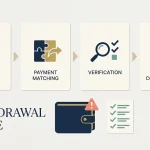
A casino’s cashier may offer card payments, e-wallets, bank transfers or cryptocurrency. The available methods depend on the operator and may be handled by alternative payment processors rather than directly by the casino. That means the method shown at deposit is only one part of the transaction: the processor, the casino’s own rules and the withdrawal route can all affect when funds arrive.
Do not assume that a deposit method will also be available for cashing out. Check the cashier’s withdrawal options and terms before sending money. If you deposit using one route but must withdraw through another, the operator’s process may involve additional steps. A crypto option does not, by itself, explain how quickly a withdrawal will be approved or completed.
Attention: Do not assume a deposit method is also available for withdrawals; always check the cashier’s specific withdrawal options and terms first.
Cryptocurrency is one method some offshore casinos accept. It can also bypass the UK restriction on gambling deposits funded by credit cards; that describes how the payment route works, not a guarantee that a particular transaction will be accepted. A search for a Curaçao-licensed crypto casino should not be taken to mean that every casino licensed there accepts cryptocurrency: payment options are set by individual operators and can change.
Withdrawal timing is not consistent across operators or methods. Descriptions of non-GamStop withdrawal times disagree: some report payments arriving within 24 hours to 5 business days, while others describe delays extending to three or four weeks. There is no single timetable that applies to every casino and payment route, and there is no regulatory clock to enforce a stated processing time for an offshore operator. Read the cashier’s terms for the method you intend to use, and distinguish the operator’s processing period from the time a bank or payment provider may take to complete its part.
Limits can also change how quickly you receive a large balance. A specialist review reports that some non-UK-regulated casinos set daily, weekly or monthly withdrawal caps, so a larger win may have to be paid in instalments. Treat that as a possibility to check in the specific casino’s terms, not as a standard applying to all operators. Look for the cap, how it is applied and whether it differs by payment method before depositing.
The practical comparison is therefore not just “which method is fastest?” Check which withdrawal routes are available, what the operator says about processing, and whether a cap could split a payment. A payment option at the deposit stage does not settle those questions.
What UK Gambling Commission Licensing Changes
A UK Gambling Commission licence changes the regulatory system an operator must answer to when it serves customers in Great Britain. The operator’s headquarters do not determine this requirement: a company based abroad still needs the relevant UKGC licence to offer gambling to people in Great Britain.
That distinction matters because a casino operating under an overseas authorisation is not thereby subject to UKGC oversight. The licence it holds may permit activity in the jurisdiction that issued it, but it does not replace the authorisation required for serving the British market. A UK Gambling Commission licensed casino, by contrast, operates within the UK regulatory framework for those services.
What oversight changes for you
UKGC licensing connects an operator’s provision of gambling in Great Britain with local requirements, including responsible-gambling safeguards. These requirements affect the conditions under which the operator can serve customers; they are not simply a badge describing where the company is registered.
Non-UK-regulated casinos may be subject to less stringent responsible-gambling and data-protection rules. In practice, you should not assume that an overseas site offers safeguards equivalent to those attached to a UKGC licence. Tools such as deposit limits and self-exclusion may not be available on the same basis, and Casinos not on GamStop are outside the UK Gambling Commission’s self-exclusion scheme.
This also changes where you can seek help if a dispute arises. When you use an offshore casino, UK regulatory complaint routes and the Financial Ombudsman Service are not available to you in the way they are for a UK-regulated service. A site’s own complaints process does not create UKGC oversight.
Do
- Verify the operator on the UKGC public register
- Use UK-regulated services for mandatory protections
- Check the specific complaint route for offshore sites
Don’t
- Assume a foreign licence equals UKGC oversight
- Rely on non-UK sites for UK-level data protection
- Expect the UKGC to resolve offshore disputes
Why the licence comparison matters
A casino licence comparison is meaningful only when it distinguishes the regulator and the market the operator is authorised to serve. An overseas licence and a UKGC licence are not interchangeable versions of the same permission. The former relates to its issuing jurisdiction; the latter is required for operators serving customers in Great Britain.
This does not mean that every detail of an operator’s service can be inferred from the licence alone. It does mean that the licence determines which regulatory framework applies, including the protections and routes for redress that may be relevant if something goes wrong. Treating the word “licensed” as sufficient can therefore conceal an important difference.
Before depositing, consider whether the casino is operating under UKGC oversight or outside that system. If it is non-UK-regulated, do not assume UK responsible-gambling tools, data protections or complaint mechanisms will apply. You remain responsible for checking the rules relevant to you and understanding the implications of using the service.
What an MGA Licence Tells You About a Casino
An MGA licence identifies Malta as the jurisdiction responsible for licensing the casino operator. It does not identify the site as UK-licensed, and it should not be read as a substitute for authorisation from the UK Gambling Commission. The regulator named on a licence tells you which licensing system applies; the word “licensed” by itself does not tell you that the operator is authorised in every country where its site can be reached.
Malta is one of several jurisdictions in which non-UK-regulated casinos may be licensed. Others include Curaçao, Gibraltar and Anjouan. So, when you see a claim that a site is an MGA-licensed casino, the useful information is the jurisdiction it names—not an assurance that the casino has a UK licence or that UK rules apply to your account.
Non-Gamban Casinos in the UK: What the Label Means
The same distinction matters if you use a casino app. An app is a way to access a gambling service; its presence on your device does not establish which authority licenses the operator. Look for the operator and licensing details associated with the service itself. A Malta-licensed casino and a UK-licensed casino are not interchangeable descriptions, even if both offer similar games or appear accessible to you.
Terms such as “small casino licence UK” can also blur separate questions. The size of a casino, or the fact that it has a licence from Malta, does not make that licence a UK authorisation. What matters is the jurisdiction responsible for the licence and whether the operator has the separate authorisation required to serve customers in Great Britain.
Treat the MGA name as a starting point for identifying the licensing jurisdiction, not as proof of UK oversight or a promise of particular protections. Before relying on a licence claim, check that the operator’s own licensing information names the regulator clearly and refers to the same company that runs the site. If the information is vague, or the company and licence details do not line up, you cannot confidently tell from the label alone who is responsible for regulating that service.
This distinction is useful when comparing Malta-licensed casinos with sites licensed elsewhere: the named authority changes, so the relevant licensing framework changes too. It does not, by itself, establish that one casino is safer or more suitable than another, and it does not confer UKGC status.
Comparing Licensing Jurisdictions
When comparing Malta-licensed casinos with those licensed in Curaçao, Gibraltar, or Anjouan, the named authority changes, and therefore the relevant licensing framework changes too. However, this does not establish that one is safer than another, nor does it confer UKGC status.
How to Check Whether a Casino Has a UK Licence
A casino’s own use of the word “licensed” does not establish that it is authorised to serve customers in Great Britain. The relevant question is whether the operator holds a current licence from the UK Gambling Commission for the gambling it offers. A licence issued elsewhere does not put the site within the UKGC system.
To check a site, find the operator’s legal name and licence information in its terms or on its website. Then look up that operator in the UK Gambling Commission’s public register. Compare the registered company with the name given by the casino, and make sure the entry relates to the site you are considering. A different company name, or a foreign regulator’s logo without a matching UKGC entry, is not evidence of UK authorisation.
This is more reliable than relying on a list of UK-licensed online casinos maintained by another website. Lists can become outdated, and an operator’s brand may not be its legal company name. Check the register directly rather than assuming a casino is covered because it appears in a directory or says it holds a licence.
A casino with no UK licence may still display a licence from another jurisdiction. That tells you the site is operating outside the UKGC scheme; it does not give you UK regulatory protections. The distinction matters if you need to exclude yourself or raise a complaint. Casinos not on GamStop are not included in the UK Gambling Commission’s self-exclusion scheme, so a GamStop exclusion does not cover them.
If you play at an offshore site, you also lose access to UK protections that apply through the regulated system, including mandatory responsible-gambling tools and recourse to the UK’s Financial Ombudsman Service. Do not assume that the UKGC can resolve a dispute with an operator it does not license, or that the same complaint routes apply.
Non-UKGC-Licensed Casinos: Rules and Risks
Treat the licence check as a status check, not a guarantee about every part of a casino’s service. If the operator cannot be matched to a current UKGC register entry, regard it as outside UK licensing rather than inferring authorisation from a foreign licence. You are responsible for checking the law and understanding the implications before using an offshore gambling service.
New Casinos and the Checks That Matter for Anjouan Licences
A recently launched casino may display an Anjouan casino licence claim, but the label alone does not establish that the licence is current or belongs to the company operating the site. Before relying on it, look for the operator’s legal company name and licence details, then compare them with the public register. Check that the register entry exists, that its expiry date has not passed, and that the company name matches. A similar name or a licence image on the casino’s website is not a substitute for those checks.
Keep the claimed jurisdiction separate from other licensing claims. An Anjouan licence does not authorise operation in the United Kingdom. If a casino also describes itself as newly UK-licensed or newly licensed by the Malta Gaming Authority, treat that as a separate claim: identify the regulator named and verify the relevant entry rather than assuming one licence covers another.
The complaint route also differs from what you may expect at a UK-licensed casino. The Anjouan authority does not handle, mediate or decide player complaints. Anjouan-licensed casinos are not required to provide an independent dispute-resolution process comparable to UK Gambling Commission-approved services, nor must they integrate GAMSTOP. If a dispute arises, you should not assume that a UK regulator or UK complaint scheme can intervene.
Check the operator’s own complaint procedure before depositing. Under Anjouan’s framework, operators must respond to complaints within 30 calendar days, but that response requirement does not mean the authority will resolve the dispute if you remain dissatisfied. If the register details are missing, expired or inconsistent with the company named in the site’s terms, treat the licence claim as unverified and do not rely on it as evidence of UK authorisation.
Can UK players legally play at casinos licensed in Anjouan?
Yes, UK law does not explicitly prohibit you from using gambling services licensed abroad, and players do not commit a criminal offence by gambling on an unlicensed site. An Anjouan licence does not, however, authorise the casino to operate in the UK.
How do casinos outside GamStop operate?
They operate outside the UKGC’s self-exclusion scheme, so they are not part of GamStop. Operators serving customers in Great Britain still require a UKGC licence, regardless of where they are based.
Are sites that are not on GamStop legal for players in the UK to access?
UK law does not explicitly prohibit you from using gambling services licensed in other countries, and players do not commit a criminal offence by gambling on an unlicensed site. The rules target operators supplying gambling services into the UK market.
Is it legal for a UK player to gamble at an Anjouan-licensed casino?
Yes, UK law does not explicitly prohibit you from using gambling services licensed abroad, and players do not commit a criminal offence by gambling on an unlicensed site. An Anjouan licence does not authorise the casino to operate in the UK.
What happens if I have a dispute with an Anjouan-licensed casino as a UK player?
The Anjouan authority does not handle or adjudicate player complaints, and these casinos do not provide an independent dispute-resolution route comparable to UKGC-approved ADR. Under Anjouan’s framework, the operator must respond to complaints within 30 calendar days.
Is an Anjouan casino licence legitimate?
An Anjouan licence is an authorisation issued within that jurisdiction, but it is not a UKGC licence and does not authorise the casino to operate in the UK. It also does not guarantee segregated player funds or an independent dispute-resolution process.
Casino Sites

£1 Minimum Deposit Casinos in the UK: How They Work
A £1 cashier minimum may depend on the payment method, and does not automatically qualify...

£10 Minimum Deposit Casinos in the UK: How It Works
A cashier minimum sets the smallest accepted payment; it is not a guide to how...

£2 Minimum Deposit Casinos in the UK: What to Check
A low account deposit may not meet the separate rules for a payment method, promotion,...

£20 Minimum Deposit Casinos in the UK: How They Work
A cashier minimum applies to the funding transaction, while game stakes follow the rules and...
£3 Minimum Deposit Casinos in the UK: What to Check
A cashier threshold can vary by payment method and does not determine bonus eligibility, withdrawal...

£4 Minimum Deposit Casinos in the UK: What to Check
A cashier minimum is only an entry condition; payment methods, account rules and promotion terms...

£5 Minimum Deposit Casinos in the UK: How They Work
See how the cashier minimum works and how it relates to payment methods, bonuses and...

Anjouan casino licence: what it means in the UK
Anjouan licensing sets the operator’s regulatory basis, but does not itself authorise gambling services for...

Best casino app UK: how mobile play works
See how casino apps differ from browser play, and what to check about payments, bonus...

Foreign Casinos for UK Players: Licensing and Risks
The guide explains how foreign casinos relate to UK rules and what licensing, payment terms...

International Casinos for UK Players: Key Checks
An overview of licensing, player protections, bonuses, payments and the legal considerations that distinguish international...

Pay by Phone Credit at UK Mobile Casinos
Phone-credit deposits use a mobile account to fund a casino balance, while payment availability, fees...

Offshore casino sites for UK players: rules and risks
This guide explains licensing limits, listing caveats, payment and withdrawal risks, and how offshore sites...

Offshore casinos for UK players: rules and risks
Explains how offshore operators sit outside UKGC regulation and what that can mean for access,...

British casinos not on GamStop in 2026: key facts
GamStop applies to UKGC-licensed operators, while offshore licensing and site terms require separate checks. How...

Casino No ID Verification UK: How Checks Work
A lack of document requests at sign-up does not mean an account is verified or...

Casino Sites Not Registered with GamStop in the UK
GamStop applies to UKGC-licensed operators; overseas licensing, voluntary safeguards and casino terms can differ. What...

Casinos Without a UK Licence: Rules and Risks
An overseas operator’s location does not determine whether it needs a UKGC licence to offer...

Casinos That Bypass GamStop: How It Works
GamStop applies to participating UKGC-licensed operators; a site outside the service may operate under a...

Curaçao Casino Licence UK: What Players Should Know
A Curaçao licence identifies a licensing jurisdiction, but does not establish that a casino is...

Gibraltar Casino Licence in the UK: What to Check
A Gibraltar connection or favourable ranking does not establish which authority oversees a casino or...

Merkur Casino Online UK: Games, Demos and Checks
A practical guide to spin mechanics, demo sessions, site checks, bonus terms and the limits...

Trustworthy Online Casinos in the UK: What to Check
A practical framework for checking licensing, player safeguards, verification, games and payments before opening an...

No Account Casinos in the UK: How They Work
The label describes a sign-up or payment journey, but does not explain how a casino...

No-ID Verification Withdrawals at UK Casinos
The guide distinguishes document-free sign-up claims from later checks, and explains how verification can shape...

No Minimum Deposit Casinos in the UK: What £1 Means
A low cashier minimum does not guarantee a bonus or determine how much you can...

Non-Gamban Casinos in the UK: What the Label Means
A site's accessibility on one device does not verify its licence, safety or general relationship...

Non-GamStop Curacao Casino Sites: UK Guide
A practical framework for checking licensing claims, payment methods and self-exclusion coverage without treating them...

Non-GamStop European Casinos: UK Exclusion Explained
GamStop covers participating online gambling businesses, while individual casino closures and sites outside the scheme...

Non-UK-Registered Casinos: Regulation Explained
A guide to UKGC oversight, offshore licensing, self-exclusion, payments and checks that help assess an...

Non-UK-Regulated Casinos: UK Rules and Risks
UKGC status depends on the operator and the market it serves, not merely on whether...

Non-UKGC-Licensed Casinos: Rules and Risks
A guide to licensing, player protections, self-exclusion and payments when a casino operates outside UKGC...

Malta-Licensed Online Casinos and UK Gambling Rules
A Malta licence covers an operator’s Maltese authorisation, while serving customers in Great Britain requires...

Online Casino No Registration UK: How Checks Work
The label may describe a shorter sign-up, but it does not remove the requirement to...

Online Casinos Without Sister Sites in the UK
Sister-site connections can involve shared ownership or technology, and do not necessarily mean that brands...

Online Slots Not on GamStop: What the Label Means
GamStop applies to participating gambling establishments, not individual games, so labels and site claims need...

Safe Online Casino UK: Licence, Checks and Risks
A UKGC licence establishes a legal baseline, while identity checks, payments, game rules and safer-play...

UK Online Casino Payouts: RTP and House Edge
RTP, house edge and game-specific figures describe long-run returns, not a guaranteed result from any...

Trusted Casinos Not on GamStop UK: What to Check
Understand the limits of trust claims and examine licensing, player protections, bonus conditions and withdrawal...

Trusted UK casinos: checking licences and safeguards
A practical look at UK licensing, public-register checks, enforcement history and the protections available across...

USA Casinos for UK Players: What to Check
A US connection or an accessible website does not establish that an operator is authorised...

VPN-Friendly Casinos in the UK: Rules and Access
A VPN-friendly label describes an operator’s approach to VPN connections, not a guarantee of access...