Trusted Casinos Not on GamStop UK: What to Check
 Available in GB

Understand the limits of trust claims and examine licensing, player protections, bonus conditions and withdrawal risks.
Table of Contents
- What “trusted” can—and cannot—mean outside the UK framework
- How GamStop’s coverage works—and why an exclusion still matters
- What to check before treating a casino site as credible
- What UK players should understand about protections and safer-gambling tools
- How to read claims that a casino is among the most trusted
- Crypto gambling: access, volatility and irreversible transfers
- How to assess a casino review without relying on its verdict
- Bonus terms that change the value of an offer
- Slots and wagering: why game contribution matters
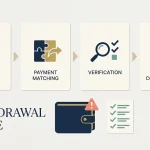
- Real-money withdrawals: verification, processing and delay risks
What “trusted” can—and cannot—mean outside the UK framework
The word “trusted” can describe a judgement about evidence; it cannot turn an operator into a safe choice by itself. For an online casino, the useful question is not whether a site calls itself trusted, but what a player can verify about who operates it, which regulator has authority over it, and what happens when a dispute arises. Those limits matter especially when a site accepts customers in the UK but does not hold a UK Gambling Commission (UKGC) licence.
A casino licensed outside Great Britain may be accessible to a UK player. Accessibility, however, is not the same as permission for the operator to serve that player. Remote gambling businesses offering services to people in Great Britain must hold the relevant UKGC licence. An operator that provides those services without one is acting illegally, even if it has a licence from another country. That distinction places responsibility for the legal status of the service on the operator; it does not mean that a player using a site without a UKGC licence commits a criminal offence.
If you’re considering casinos not on Gamstop in the UK, check the available information carefully and make sure the choice is appropriate for you. This reference card notes the payout timing provided for each operator.
1. Amunbet
Payout speed: 1-3 business days Amunbet is listed with a payout speed of 1–3 business days.
2. NightWin
Payout speed: 1-3 business days NightWin is listed with a payout speed of 1–3 business days.
3. SlotoSport
Payout speed: 1-3 business days SlotoSport is listed with a payout speed of 1–3 business days.
4. Britsino
Payout speed: 1-3 business days Britsino is listed with a payout speed of 1–3 business days.
5. EvoSpin
Payout speed: 1-3 business days EvoSpin is listed with a payout speed of 1–3 business days.
6. x3bet
Payout speed: 1-3 business days x3bet is listed with a payout speed of 1–3 business days.
7. SpinFormula
Payout speed: 1-3 business days SpinFormula is listed with a payout speed of 1–3 business days.
8. WinBeast
Payout speed: 1-3 business days WinBeast is listed with a payout speed of 1–3 business days.
9. Dieselwin
Payout speed: 1-3 business days Dieselwin is listed with a payout speed of 1–3 business days.
10. Jetsetspins
Payout speed: 1-3 business days Jetsetspins is listed with a payout speed of 1–3 business days.
This distinction is easy to blur in marketing. A foreign licence may show that an authority in another jurisdiction has authorised an operator under its rules. It does not establish that the operator is authorised to offer online gambling to customers in Great Britain, or that the authority provides protections equivalent to those under the UKGC. A licence is meaningful only in relation to the regulator that issued it, the rules it enforces and the territory in which the operator is permitted to serve customers.
Trust is a set of boundaries, not a guarantee
For a player, trust is best treated as a limited conclusion drawn from verifiable facts. It might mean that an operator’s identity and regulatory status are clear, that the licence can be confirmed with the relevant authority, and that the rules governing the service are accessible. Each fact answers a particular question. None, alone or together, guarantees that every transaction will be smooth or that a complaint will be resolved in the player’s favour.
The UKGC framework gives licensed operators a defined regulator and a set of obligations tied to offering gambling services in Great Britain. A site outside that framework does not become part of it merely because it accepts sterling, displays a foreign licence, or describes itself as suitable for UK players. If a dispute occurs, the player may be dealing with an operator and regulator whose rules and processes sit outside the UK system. The practical route for challenging a decision may therefore differ from the one available with a UKGC-licensed operator.
Non-Gamban Casinos in the UK: What the Label Means
That is the central consumer-protection gap. It is not simply a question of whether the site appears polished or whether its games load. The issue is which body has jurisdiction over the operator, what that body can require, and whether the player can use protections associated with UK licensing. A non-UK licence may offer some oversight under its own regime, but it cannot supply UKGC authority where that authority is absent.
The same limit applies to the label “trusted online casino”. It is not a regulatory category and does not confer rights. A site can use the word without demonstrating that it is licensed to serve Great Britain. Conversely, a claim that an operator is licensed somewhere else is not enough to settle whether its UK-facing service is lawful or what recourse a customer has. Trust should therefore describe the scope of evidence, not a promise that the operator is safe.
Separate the player’s position from the operator’s
Two statements can both be true: a UK player using a casino without a UKGC licence is not, on that basis, committing a criminal offence; and an operator offering gambling services to UK residents without the required UKGC licence is acting illegally. Confusing these points can make an offshore site seem more legitimate than it is. The absence of criminal liability for the player does not mean that the operator is authorised, or that the player receives the protections attached to a UKGC licence.
Legal Distinction
An operator offering gambling services to UK residents without a UKGC licence is acting illegally, even if the player commits no criminal offence by using the site.
For someone looking for a trusted casino online, the more accurate starting point is therefore a boundary: a site without a UKGC licence operates outside the UKGC consumer-protection framework. It may have a regulator elsewhere, but that is not equivalent to UK regulation. Players using such sites may also lack access to UK-based support services associated with the domestic framework, leaving them with fewer familiar routes when they need help or want to raise a concern.
This does not mean that every foreign-licensed operator behaves in the same way. It means that claims about trust cannot erase the difference in oversight. A site’s own assurances are not a substitute for the authority to serve UK customers, and the appearance of a licence is not proof of UKGC supervision. Those distinctions are the starting point for assessing what “trusted” can reasonably mean: not certainty about an outcome, but a clear understanding of who regulates the operator and which protections do—and do not—apply.
How GamStop’s coverage works—and why an exclusion still matters
GamStop is a self-exclusion service that blocks a registered person from gambling with participating establishments licensed by the UK Gambling Commission (UKGC). Its coverage is therefore defined by the operator’s relationship with the UK regulatory system, not by whether a website describes itself as British, international or a trusted non-GamStop casino.
When you register, you select an exclusion period of six months, one year or five years. During that period, GamStop restricts your access to gambling at establishments within its scope. The restriction is not a pause that you can reverse when circumstances change: a GamStop self-exclusion cannot be shortened or cancelled before the period you selected has ended. That fixed term is central to how the service works. It gives the exclusion a boundary that is not controlled by a later change of mind.
Casinos Without a UK Licence: Rules and Risks
This also explains what GamStop does not cover. A casino operating outside the UKGC’s jurisdiction is not brought into the scheme simply because a UK resident can reach its website. Non-UK casinos do not share their customer data with GamStop or apply its exclusion measures through the service. As a result, registering with an establishment that does not cooperate with GamStop may allow someone to gamble despite an active exclusion. That describes a gap in coverage, not a way to end or suspend the exclusion.
The distinction matters because access and regulation are separate questions. A website may be reachable from the UK without being authorised to offer gambling to people in Great Britain. Remote operators serving the British market must hold the relevant UKGC licence; an operator outside that system is not made lawful for the UK market merely because GamStop cannot block it. Nor does being outside GamStop establish that a casino is reliable or provides equivalent safeguards.
Reports have described other ways people may attempt to get around an exclusion, including using another person’s personal details to register. A report by neconnected.co.uk also describes attempts involving anonymising tools, such as VPNs, anonymous proxies and the TOR browser. These are descriptions of possible circumvention, not recommendations. They do not alter a person’s GamStop registration or cancel its selected term, and they should not be read as dependable or legitimate solutions.
Attention: Using VPNs, anonymous proxies, or the TOR browser to circumvent a GamStop exclusion does not cancel your registration or shorten the selected term.
There is a practical reason not to treat these routes as a substitute for ending an exclusion: the service’s restriction remains in force at participating UKGC-licensed establishments. Trying to place gambling activity elsewhere does not change the period you chose or remove the original restriction. It changes only where the attempt is made, and may move it beyond the protections and controls attached to the UKGC framework. A casino outside GamStop should not be treated as equivalent to a participating operator simply because it accepts a registration.
The boundary can be summarised plainly: GamStop applies to gambling establishments under the UKGC system; it does not impose a universal block across every gambling website a person might find. That limitation does not make the exclusion meaningless. It still restricts access within the network it covers, and its fixed term prevents a registrant from cancelling the measure early through the service. Understanding both parts—the reach of the block and its limits—helps avoid confusing “not covered by GamStop” with “safe to use” or “approved for UK customers.”
If you have registered because you want gambling to stop, the exclusion period is meant to remain in place for the full term selected. A site’s lack of participation does not change that commitment. The useful distinction is not between casinos that are supposedly trusted and those that are not; it is between operators covered by the UKGC-backed exclusion system and those outside its reach. That distinction explains how a gap can exist without making circumvention a sound response to self-exclusion.
Best casino app UK: how mobile play works
What to check before treating a casino site as credible
A polished website, a familiar payment method or a confident claim of being a trusted casino site does not establish who operates it or which rules apply. Start with details that can be checked independently: the operator’s legal name, the licence number, the regulator named on the site and the jurisdiction covered by that licence. If any of these are missing, inconsistent or difficult to locate, the site has not provided a clear basis for its claims.
Then compare the details with the regulator’s own records. Search the official register for the operator’s legal name or licence number; do not rely only on a badge, certificate image or link on the casino’s pages. Check that the register identifies the same business and that the licence status supports the claim being made. A licence belonging to a different company is not evidence that the casino is licensed. Nor is a statement that a group holds a licence enough if the site does not show which legal entity runs the service you are using.
The jurisdiction matters because a licence is not a universal approval. Non-UK casinos may identify Malta, Gibraltar or Curacao as the licensing jurisdiction. That tells you where the operator says it is regulated; it does not mean the site holds a UK Gambling Commission licence or that the foreign regulator provides the same framework. For a site serving customers in Great Britain, the operator must hold the relevant UKGC licence. A foreign licence does not replace that requirement.
Do
- Search the official regulator’s register for the operator’s name
- Verify that the licence status matches the claims
- Confirm the legal entity running the specific site
Don’t
- Rely solely on badges or certificate images
- Assume a foreign licence equals UK authorisation
- Trust a licence belonging to a different company
This distinction is important when a casino presents itself as a trusted casino site UK players can use. Check whether it is actually authorised to serve the British market, rather than treating a foreign licence as proof of UK authorisation. UK rules place responsibility on operators offering remote gambling to British customers to hold the appropriate UKGC licence, regardless of where the business is based. A site operating without that licence is outside the UKGC system.
You should also read the site’s terms and privacy information to identify the contracting company and the law or jurisdiction it names. These documents should agree with the licensing information, not point to a different company or location. If the operator’s identity, licence details and stated jurisdiction do not line up, you cannot reliably tell which entity is accountable or which regulator’s process applies to a complaint.
A non-UK licence also has a specific consequence for self-exclusion: casinos licensed outside the UK are not required to integrate with GamStop. They do not share data with the service or apply its exclusion measures because they are outside the UKGC’s regulatory reach. A licence from another jurisdiction therefore cannot be treated as evidence that a GamStop registration will be recognised.
Finally, separate verifiable facts from promotional labels. “Trusted”, “top-rated” or “best” is a conclusion, not a licensing credential. Look for the operator’s identity and licence details, confirm them in the regulator’s official records, and check that the records match the site you are viewing. If verification fails, stop treating the claim as established; do not fill the gap with assurances from the site itself.
International Casinos for UK Players: Key Checks
What UK players should understand about protections and safer-gambling tools
A safer-gambling feature is useful only if you know what it does, when it takes effect and who is responsible for enforcing it. A limit displayed in an account menu is not, by itself, evidence that the operator is subject to the same rules or oversight as a UK-licensed casino.
UK Gambling Commission-licensed operators must participate in GamStop. That requirement connects an operator to the national self-exclusion system; it is not simply a feature that an individual casino can choose to provide. The wider UKGC framework also governs operators serving customers in Great Britain. For example, operators must verify a customer’s age before allowing a deposit, and British online slots cannot autoplay. These are regulatory obligations, not optional interface settings.
Casinos not on GamStop sit outside that framework. A specialist casino review reports that some such sites offer deposit or loss limits, session time limits and reality checks. Other non-UK sites may provide deposit limits, self-exclusion options or reminders even where their regulator does not require them. These features may help you monitor activity, but their presence does not establish that every site offers them, that they work in the same way, or that an independent regulator will enforce them to UK standards.
The distinction is practical. A deposit limit may restrict what you can add to an account, while a session reminder may only tell you how long you have been playing. A self-exclusion control may apply only to that operator, rather than blocking access across participating UKGC-licensed sites. Before relying on a tool, read its terms to see what activity it covers, how it is activated, and whether the operator explains what happens after you request a change or exclusion. Do not assume that a tool with a familiar name has the same reach as GamStop.
A self-exclusion control at a non-UK casino may apply only to that specific operator, rather than blocking access across all participating UKGC-licensed sites.
The same caution applies to account controls described as “responsible gambling” measures. A feature can be technically available but difficult to locate, limited in scope or governed by a different regulator’s rules. The relevant question is not just whether a casino lists a limit or reminder, but what obligation backs it and what route exists if the operator does not apply it as described. Voluntary measures do not make a non-UK site equivalent to a UKGC-licensed operator in consumer protection.
Support is another important difference. If you use a casino outside the UKGC system, do not assume that UK-based gambling support services can intervene in the operator’s account or enforce its controls. You may have less access to UK-based support in resolving a dispute or responding to gambling harm. Check what help is available from the service itself and from the relevant regulator, without treating either as a substitute for the UK protections.
If you are already self-excluded through GamStop, voluntary tools at another site are not a replacement for that exclusion. A deposit cap or reminder cannot recreate the same system-wide block. The safest interpretation is to treat non-UK controls as limited features whose operation depends on that individual operator, not as a parallel version of UK safeguards.
UK Online Casino Payouts: RTP and House Edge
How to read claims that a casino is among the most trusted
“Most trusted” is a conclusion, not a licence category or a guarantee. By itself, the phrase tells you neither who assessed the casino nor what evidence they used. Treat it as a claim to examine: what specific, independently checkable facts are offered to support it, and do those facts actually relate to your position as a UK player?
A casino may point to a foreign gambling licence, established ownership or published terms. These can provide information about the operator, but they do not establish that it is authorised to serve customers in the UK. The relevant distinction is the operator’s regulatory status for this market. A casino offering online gambling to UK customers must hold a valid UK Gambling Commission licence. A licence issued elsewhere does not replace that requirement.
The legal position for a player is a separate question. It is not illegal for a UK player to use an online casino that is not on GamStop. That does not make the operator’s service lawful in the UK: an operator cannot legally offer online gambling to UK customers without the required UKGC licence. So a claim that “players can use the site” is not evidence that the site is properly licensed to serve them.
This distinction matters when a “best trusted casino” label is built around accessibility, popularity or a foreign licence. Those points may describe the site, but they do not establish UK regulatory oversight. A ranking can also reflect the publisher’s selection criteria rather than a regulator’s assessment. If the criteria are not clear, the verdict has limited meaning.
Casinos That Bypass GamStop: How It Works
The same caution applies to claims about crypto casinos. A payment method does not determine whether an operator is licensed for the UK market. Calling a service one of the most trusted crypto casinos in the UK does not change the regulatory test or provide proof that the test is met.
Trust should therefore attach to verifiable facts, not to the adjective in a headline. Where an operator falls outside the UKGC framework, you should not assume that its consumer protections or access to UK-based support services are equivalent to those at a UKGC-licensed casino. A confident label cannot fill that gap.
Crypto gambling: access, volatility and irreversible transfers
Cryptocurrency changes how funds move; it does not establish that a casino is trustworthy. A crypto casino may describe its registration process as “no-KYC”, but that label does not prove that the operator is properly licensed, that withdrawals will be honoured or that your personal information is protected. Some cryptocurrency gambling services that do not require client-data registration or verification have been reported as a way to get around GamStop. That is a description of a potential route, not a recommendation. Do not use crypto to defeat an active self-exclusion.
A cryptocurrency withdrawal can arrive quickly, but speed does not preserve its value. A specialist review describes crypto winnings as exposed to price volatility: the amount received in a particular coin may be worth less in pounds by the time you exchange it. The final value therefore depends not only on the casino’s processing but also on the market price when you convert the funds. A displayed coin balance is not a fixed sterling amount.
Transfers also have a different error profile from card payments. Crypto transactions are irreversible: once a transfer has been confirmed, it generally cannot be recalled through a bank or payment provider. If you enter the wrong wallet address, choose an incompatible network or send funds to an address you do not control, the money may be permanently lost. Check the destination and network carefully before authorising a transfer; a casino’s payment page cannot undo a mistake on the blockchain.
For UK players, a cryptocurrency payment method does not change the operator’s legal position. Remote gambling operators offering services to customers in Great Britain must hold a UK Gambling Commission licence. A site operating outside that framework is not made equivalent to a UKGC-licensed casino by accepting crypto, and may lack mandatory responsible-gambling protections. You may also have no access to UK-based support services through that operator.
Treat claims of anonymity, speed or low-friction access as descriptions of a process, not evidence of safety. In particular, no-KYC wording cannot guarantee that identity checks will never be requested, or that a withdrawal will proceed without conditions. The relevant risks remain separate: the operator controls account access and payout decisions, the crypto market affects the sterling value, and a transfer error can be final.
Irreversible Transfers
Cryptocurrency transactions are irreversible; funds sent to the wrong wallet address or via an incompatible network may be permanently lost.
How to assess a casino review without relying on its verdict
A review’s conclusion is an opinion; the details beneath it are what you can test. Treat words such as “trusted” or “recommended” as a reviewer’s judgement, not proof that a casino is authorised to serve people in the UK. Look for the basis of each claim: does the page identify a regulator, give licensing information, and explain how that information was checked?
For a licensing claim, go beyond the review itself. Find the regulator’s official register and search for the operator using the name shown on the casino’s site. Check that the record corresponds to that business and that the stated licence relates to gambling services. A logo, a licence number printed in a footer, or a reviewer’s assertion is not independent confirmation.
The jurisdiction matters. A review may describe a casino as licensed in Malta, Gibraltar or Curacao. That identifies a claimed regulatory home; it does not establish that the operator holds the UK Gambling Commission licence required to offer remote gambling to customers in Great Britain. Do not let a review blur those separate points by using “licensed” as if it meant “licensed for the UK”.
Also inspect how the review handles uncertainty. A useful assessment distinguishes verifiable details from the reviewer’s interpretation, and does not turn a list of features into a claim of safety. If it praises a site but gives no evidence for its licensing statements, the praise does not fill that gap. The same applies to reviews of casino games or bingo: a confident verdict is not a substitute for explaining what was assessed.
Offshore casino sites for UK players: rules and risks
Check the page’s commercial context as well. If it contains referral links or promotional offers, it should clearly disclose any affiliate relationship and label promotional material. That does not automatically make its factual statements false, but it gives you a reason to verify important claims independently rather than treating the verdict as neutral.
A dependable review is therefore one you can audit: its licensing claims lead to an official record, its conclusions are separated from evidence, and its commercial purpose is visible. If those elements are absent, set aside the rating and rely only on details you can confirm.
Bonus terms that change the value of an offer
A bonus is not equivalent to cash you can withdraw. Its value depends on the conditions attached to it: wagering requirements, deadlines, betting rules and any cap on winnings. These details matter whether the offer is described as free spins, cashback or a deposit bonus. The label alone does not tell you what you can ultimately keep.
Wagering requirements set how much qualifying play must take place before bonus-related winnings become eligible for withdrawal. Specialist casino reviews report a commonly cited industry range of 30x to 40x, while requirements above 50x are generally described as predatory. Treat those figures as a point of comparison, not proof that an offer is fair. Check which amount the multiplier applies to, and whether it covers the bonus, your deposit, or both; the wording can materially change the total play required.
A deadline adds a separate constraint. If the required wagering is not completed within the stated period, the operator’s terms may affect the bonus or its associated winnings. Read when the clock starts and what happens when time runs out. A large bonus can have little practical value if its deadline makes the conditions difficult to meet.
Bonus Value Check
- Check the total wagering requirement multiplier
- Verify the deadline for completing wagering
- Identify the maximum bet allowed during the promotion
- Confirm any maximum withdrawal caps on bonus winnings
The terms may also set a maximum bet while wagering is active. Exceeding it can put eligibility for bonus winnings at risk, so check the rule before placing bets rather than relying on the headline offer. A maximum withdrawal cap can restrict how much bonus-derived value you may cash out, even after meeting the wagering requirement.
For a trusted casino offer, assess the full sequence: what must be wagered, by when, under which betting rules, and what amount can be withdrawn at the end. A trusted UK casino label or a claim of being among trusted casinos does not change those conditions. Compare the written terms with the promotion itself, including any rules specific to free spins or cashback. If a key condition is unclear, the advertised value is not enough to determine what you could receive.
Slots and wagering: why game contribution matters
A bonus wagering requirement is not a single task that every game advances at the same rate. The casino’s terms assign a contribution to each game or category. That percentage determines how much of a stake counts towards the required wagering total. As a result, two games played with the same stake can move your progress by different amounts.
Slots may count fully towards wagering, while table games may count at a lower rate or not count at all. The exact treatment depends on the offer’s rules. If a table game contributes less, placing a stake there adds less progress than the same stake on a slot. If it contributes nothing, that play does not reduce the outstanding wagering requirement.
This distinction matters when you estimate how much play remains. A displayed balance or a number of rounds played cannot, by itself, tell you whether you are close to completion. You need to know the contribution assigned to the game and how the casino calculates progress. A bonus tracker can help, but its displayed figure should be consistent with the written terms.
How contribution changes progress
Suppose a bonus has an outstanding wagering requirement and you play a game that contributes only partially. The casino counts only the eligible portion of your play towards that requirement. A game with no contribution leaves the wagering total unchanged, even though your balance may change as a result of the game.
That creates two separate effects: the financial result of the game and the progress recorded against the bonus. Winning or losing does not necessarily alter the contribution rate. The terms determine the rate; the game result determines what happens to the funds in play. Do not treat a win as proof that wagering has been completed, or a loss as proof that no progress was made.
When a terms page says that slots contribute more than table games, read that as a difference in accounting, not a statement about the odds or likely return of either category. Contribution rules describe how play is counted for the promotion. They do not establish which game is better for you, and they cannot guarantee that a bonus will produce withdrawable winnings.
Wagering Progress
Identify Contribution
Find the contribution percentage for the game in the casino’s terms (e.g., slots 100%, table games 10%).
Calculate Progress
Apply the percentage to your stake to determine how much counts toward the total requirement.
Track Remaining Total
Subtract the eligible portion of your play from the outstanding wagering requirement.
What to verify in the rules
Look for the contribution table or wording that identifies eligible game categories. Check whether the rate applies to all slots or only specified categories, and whether table games are excluded or simply count at a reduced rate. If the terms use broad labels, confirm that the game you intend to play falls within the relevant category before relying on it to advance wagering.
Also check whether the bonus tracker records progress by game. If the displayed progress appears not to match the stated contribution, pause before continuing and ask the operator to explain the calculation. Keep the relevant terms and any response. A vague promotional description is not a substitute for a clear rule about which play counts.
This is especially important where an offer is presented alongside a wide selection of games. The number of games available does not tell you how each one contributes. Nor does a general claim that a site is among the most trusted online casino sites answer that question. For a specific offer, the useful evidence is the applicable rule and whether the operator applies it consistently.
Casinos not on GamStop operate outside the UK Gambling Commission framework and may lack protections that UK-licensed operators must provide. A contribution table can clarify bonus accounting, but it does not make the wider service equivalent to a UKGC-licensed casino or establish that it is safe. If you are self-excluded, do not use a bonus or a change of game category as a reason to seek access elsewhere.
The practical test is straightforward: identify the game category, find its stated contribution, and work out whether that rate makes the promotion’s requirement attainable on terms you understand. If the contribution is unclear, assume neither that all games count equally nor that a slot automatically counts in full. Treat the written offer rules, rather than the casino’s trust label, as the basis for judging how play affects wagering.
Non-GamStop European Casinos: UK Exclusion Explained
Real-money withdrawals: verification, processing and delay risks
A withdrawal can be held up before the payment provider receives it. The casino may first need to confirm your identity and check that the account and payment details match. Completing KYC verification early can reduce the chance that these checks begin only after you request a payout. A specialist review recommends submitting the required documents before withdrawing; follow the operator’s stated process and keep the details on your account accurate.
The distinction matters because “processing time” can refer to more than one stage. The casino’s review and approval come first; the payment provider then handles the transfer. A delay at either stage can affect when funds reach you, so a stated payout speed is not necessarily the time from clicking “withdraw” to seeing money in your account.
Payment method also affects the expected pattern. A specialist review reports that e-wallet withdrawals are generally faster than card withdrawals, while casino-side processing may take up to 24 hours. Treat that as a reported pattern, not a guarantee for every account or transaction. The operator’s own terms should explain its process, and any verification request can add time before processing starts.
When comparing trusted real-money casinos, focus on the steps and conditions behind a payout claim: when identity checks take place, whether the casino gives a processing estimate, and what happens if it needs more information. For a real-money casino in the UK, the operator must hold the relevant UK Gambling Commission licence to serve British customers legally. A fast withdrawal claim alone does not establish that status or show how a disputed or delayed payment will be handled.
Keep copies of documents you submit and note the date of any withdrawal request. If a delay occurs, those records help you distinguish an outstanding identity check from a payment that has already been approved but is still moving through the provider.
Are casinos that bypass GamStop illegal for UK players to use?
No, using a casino without a UKGC licence is not, on that basis, a criminal offence for you. However, an operator offering gambling services to people in Great Britain without the required UKGC licence is acting illegally.
What are casinos not on GamStop?
They are gambling sites that do not participate in GamStop, generally because they operate outside the UKGC’s regulatory system. They do not enforce GamStop exclusions, and they do not provide the consumer protections associated with a UKGC licence.
What is Gamstop?
GamStop is a self-exclusion service for UK residents that blocks registered users from gambling with participating, UKGC-licensed establishments. You choose an exclusion period of six months, one year or five years, and cannot shorten or cancel it before it ends.
What exactly does GamStop block?
It blocks your access to gambling with establishments licensed by the UKGC that participate in the service. It does not cover casinos operating outside the UKGC’s jurisdiction.
How can I verify a casino’s licence is genuine?
Check the licence with the regulator that issued it, and confirm which operator and territory it covers. A foreign licence does not authorise a casino to offer gambling services in Great Britain without a UKGC licence.
What’s the fastest way to get my winnings out?
E-wallet withdrawals are generally faster than card withdrawals, and casino processing can take up to 24 hours. Completing KYC verification early can help prevent delays; cryptocurrency withdrawals may be fast but their value can fluctuate.
Is it safe to play at non-Gamstop gambling sites?
A site’s claims of being trusted do not guarantee safety. Without a UKGC licence, you do not have the consumer protections associated with UK regulation, and any oversight comes from the site’s own regulator, if it has one.
Casino Sites

£1 Minimum Deposit Casinos in the UK: How They Work
A £1 cashier minimum may depend on the payment method, and does not automatically qualify...

£10 Minimum Deposit Casinos in the UK: How It Works
A cashier minimum sets the smallest accepted payment; it is not a guide to how...

£2 Minimum Deposit Casinos in the UK: What to Check
A low account deposit may not meet the separate rules for a payment method, promotion,...

£20 Minimum Deposit Casinos in the UK: How They Work
A cashier minimum applies to the funding transaction, while game stakes follow the rules and...

£3 Minimum Deposit Casinos in the UK: What to Check
A cashier threshold can vary by payment method and does not determine bonus eligibility, withdrawal...

£4 Minimum Deposit Casinos in the UK: What to Check
A cashier minimum is only an entry condition; payment methods, account rules and promotion terms...

£5 Minimum Deposit Casinos in the UK: How They Work
See how the cashier minimum works and how it relates to payment methods, bonuses and...

Anjouan casino licence: what it means in the UK
Anjouan licensing sets the operator’s regulatory basis, but does not itself authorise gambling services for...

Best casino app UK: how mobile play works
See how casino apps differ from browser play, and what to check about payments, bonus...

Foreign Casinos for UK Players: Licensing and Risks
The guide explains how foreign casinos relate to UK rules and what licensing, payment terms...

International Casinos for UK Players: Key Checks
An overview of licensing, player protections, bonuses, payments and the legal considerations that distinguish international...

Pay by Phone Credit at UK Mobile Casinos
Phone-credit deposits use a mobile account to fund a casino balance, while payment availability, fees...

Offshore casino sites for UK players: rules and risks
This guide explains licensing limits, listing caveats, payment and withdrawal risks, and how offshore sites...

Offshore casinos for UK players: rules and risks
Explains how offshore operators sit outside UKGC regulation and what that can mean for access,...

British casinos not on GamStop in 2026: key facts
GamStop applies to UKGC-licensed operators, while offshore licensing and site terms require separate checks. How...

Casino No ID Verification UK: How Checks Work
A lack of document requests at sign-up does not mean an account is verified or...

Casino Sites Not Registered with GamStop in the UK
GamStop applies to UKGC-licensed operators; overseas licensing, voluntary safeguards and casino terms can differ. What...

Casinos Without a UK Licence: Rules and Risks
An overseas operator’s location does not determine whether it needs a UKGC licence to offer...

Casinos That Bypass GamStop: How It Works
GamStop applies to participating UKGC-licensed operators; a site outside the service may operate under a...

Curaçao Casino Licence UK: What Players Should Know
A Curaçao licence identifies a licensing jurisdiction, but does not establish that a casino is...

Gibraltar Casino Licence in the UK: What to Check
A Gibraltar connection or favourable ranking does not establish which authority oversees a casino or...

Merkur Casino Online UK: Games, Demos and Checks
A practical guide to spin mechanics, demo sessions, site checks, bonus terms and the limits...

Trustworthy Online Casinos in the UK: What to Check
A practical framework for checking licensing, player safeguards, verification, games and payments before opening an...

No Account Casinos in the UK: How They Work
The label describes a sign-up or payment journey, but does not explain how a casino...

No-ID Verification Withdrawals at UK Casinos
The guide distinguishes document-free sign-up claims from later checks, and explains how verification can shape...

No Minimum Deposit Casinos in the UK: What £1 Means
A low cashier minimum does not guarantee a bonus or determine how much you can...

Non-Gamban Casinos in the UK: What the Label Means
A site's accessibility on one device does not verify its licence, safety or general relationship...

Non-GamStop Curacao Casino Sites: UK Guide
A practical framework for checking licensing claims, payment methods and self-exclusion coverage without treating them...

Non-GamStop European Casinos: UK Exclusion Explained
GamStop covers participating online gambling businesses, while individual casino closures and sites outside the scheme...

Non-UK Licence Casinos: What the Licence Means
Licences from Malta and other jurisdictions apply under their own regulators and are not the...

Non-UK-Registered Casinos: Regulation Explained
A guide to UKGC oversight, offshore licensing, self-exclusion, payments and checks that help assess an...

Non-UK-Regulated Casinos: UK Rules and Risks
UKGC status depends on the operator and the market it serves, not merely on whether...

Non-UKGC-Licensed Casinos: Rules and Risks
A guide to licensing, player protections, self-exclusion and payments when a casino operates outside UKGC...

Malta-Licensed Online Casinos and UK Gambling Rules
A Malta licence covers an operator’s Maltese authorisation, while serving customers in Great Britain requires...

Online Casino No Registration UK: How Checks Work
The label may describe a shorter sign-up, but it does not remove the requirement to...

Online Casinos Without Sister Sites in the UK
Sister-site connections can involve shared ownership or technology, and do not necessarily mean that brands...

Online Slots Not on GamStop: What the Label Means
GamStop applies to participating gambling establishments, not individual games, so labels and site claims need...

Safe Online Casino UK: Licence, Checks and Risks
A UKGC licence establishes a legal baseline, while identity checks, payments, game rules and safer-play...

UK Online Casino Payouts: RTP and House Edge
RTP, house edge and game-specific figures describe long-run returns, not a guaranteed result from any...

Trusted UK casinos: checking licences and safeguards
A practical look at UK licensing, public-register checks, enforcement history and the protections available across...

USA Casinos for UK Players: What to Check
A US connection or an accessible website does not establish that an operator is authorised...

VPN-Friendly Casinos in the UK: Rules and Access
A VPN-friendly label describes an operator’s approach to VPN connections, not a guarantee of access...